

Dr. Josephine Johnson
|
Getting your Trinity Audio player ready...
|
HISTORIC PRESERVATIONIST, CENTENARIAN
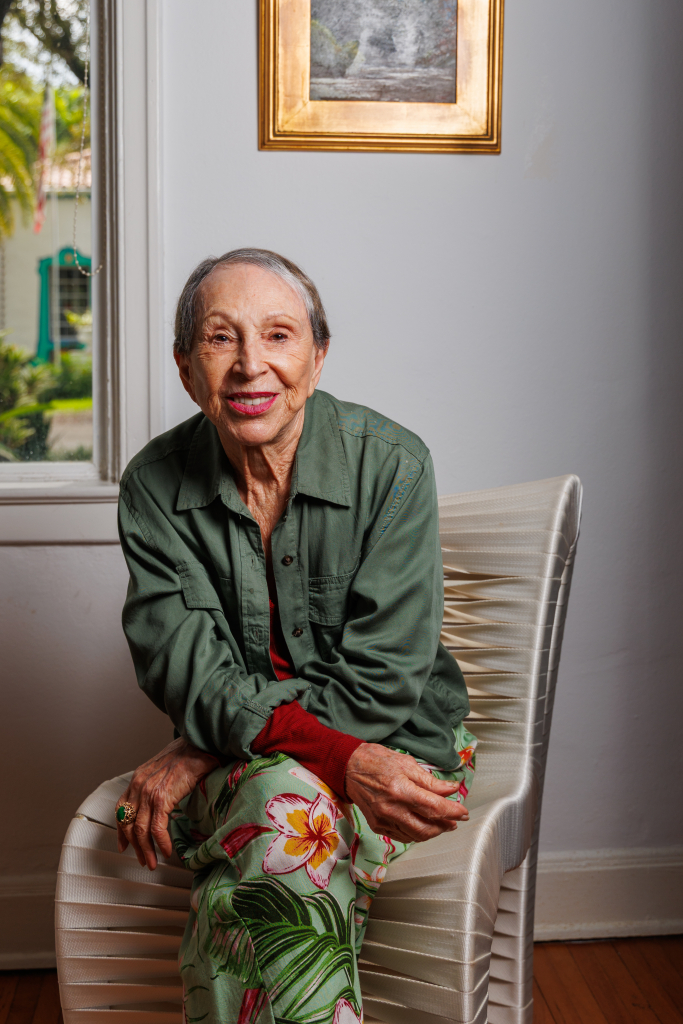
There are few people who can rival the City of Coral Gables for age. One of them is Dr. Josephine Johnson, born on January 25, 1925, only a few months before the City Beautiful was incorporated. A longtime Gables resident, Dr. Johnson was first born in England, then evacuated to the U.S. as a teenager during World War II on the last converted troop ship that escaped German U-boats, just before the Blitz.
She moved from New York to Coral Gables in 1949, taking an interest in the city’s historic preservation efforts. At 100-years-old, Johnson is still an active preservationist and member of the Historic Preservation Association of Coral Gables. She, herself, lives in a beautifully restored Old Spanish residence in the Alcazar Historic District, which she and her neighbors helped designate as historic.
Beyond the Gables, Johnson has also worked on preservation projects nationwide and overseas, from the Pioneer Cemetery in Key West to steam ships in England. In 2009, she published a book, “SS Asteroid or Tell It to the Bees,” a moving account of a World War II vessel that rescued troops from Dunkirk, and how she helped to restore and preserve the historic ship.
In 1952, she – an English PhD – and her late husband Marvin S. Cone established the Deerborne School, a small private elementary and middle school formerly located at 311 Sevilla Avenue (today’s Mercedes Benz of Coral Gables dealership).
LATEST ACCOMPLISHMENT
Dr. Johnson was recently honored by the University of Miami as the founder of the School of Communication, recognized for her tireless efforts in creating the school in 1985. She is referred to as the Communication School’s “foundation builder,” and holds the distinct title of Chair Emeritus of The U. She was also instrumental in raising the funds to create the Cosford Cinema at UM. To add to her many awards and accomplishments, the Coral Gables City Commission recently presented Dr. Johnson with a “Certificate of Recognition,” honoring her lifelong legacy.
WHAT SHE SAYS
“Perhaps preservation is nothing more than an atavistic necessity to bring us closer to eternal life,” says Johnson. “Steps away from mummification, we attempt to preserve stone, bricks, sacred earth, the landscape, to align ourselves with creative spirits to guide us in our own journeys.” – Karelia Carbonell