
World Cup 2026 In Coral Gables
|
Getting your Trinity Audio player ready...
|
FIFA FEVER
Where to watch, what to know, and why the World Cup feels closer than ever in Coral Gables
By Yousra Benkirane | Photos By Rodolfo Benitez
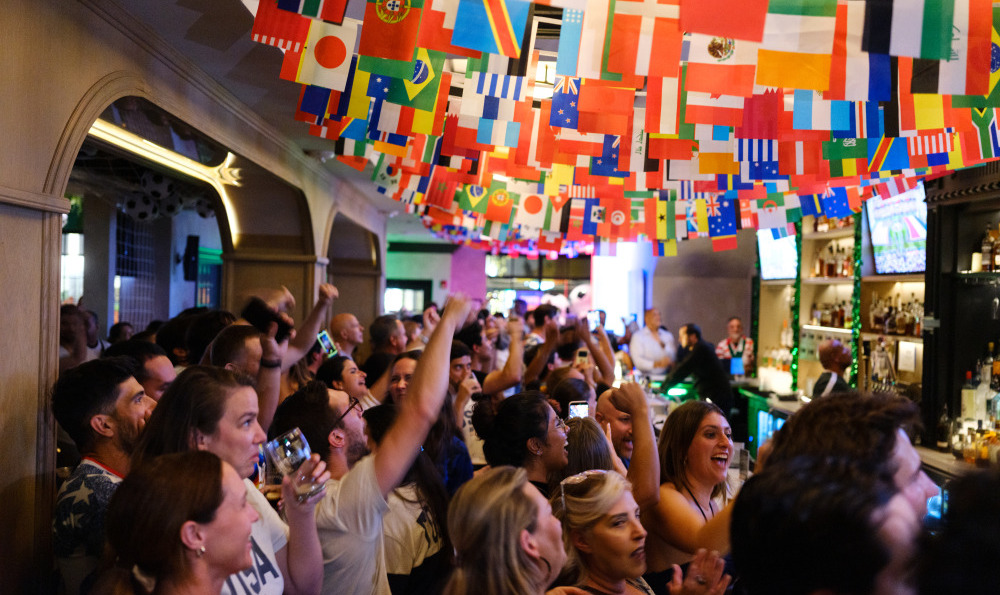
An hour before kickoff at JohnMartin’s, the TVs are on. The sound is up. People are already in jerseys, crowded near the bar with the nervous, restless energy that sports usually produce. A table in the corner is trying to figure out the group standings. Someone at the bar is already annoyed with the referee before he has done anything wrong. And every so often, in the course of the 90-minute game that follows, a goal is scored and bedlam breaks out, fans screaming at the top of their lungs.
This is what the World Cup looks like in Coral Gables: not one massive fan zone, but dozens of public venues like this, each with its own version of the tournament – bars, restaurants, hotel lounges, patios, and courtyards, laden with screens large and larger, libations flowing. JohnMartin’s has decked the walls floor to ceiling with World Cup memorabilia (and screens). Graziano’s has a merchandise kiosk with customizable football jerseys.
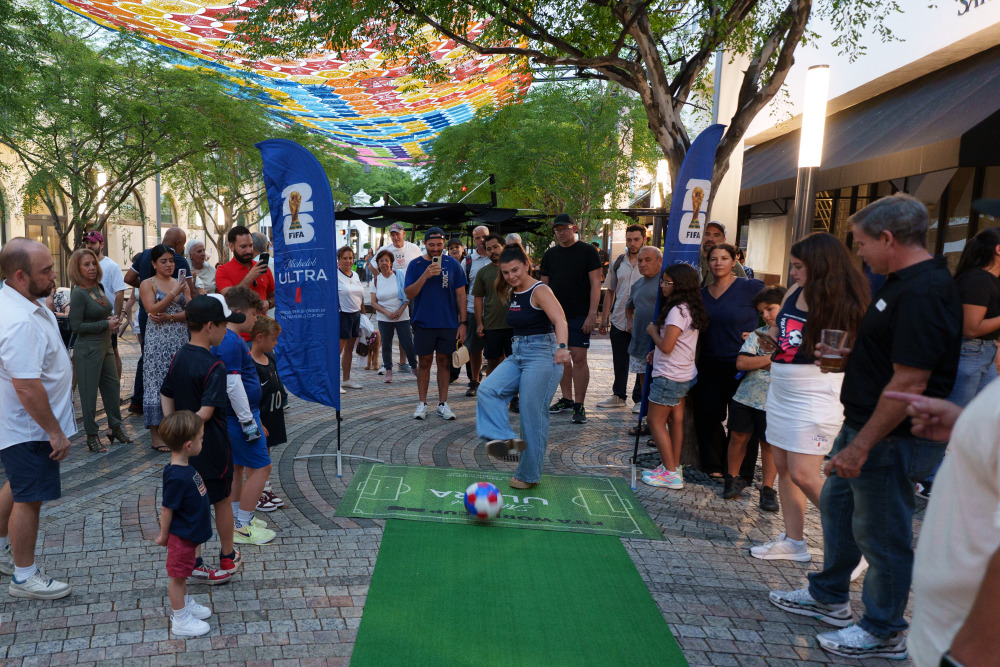
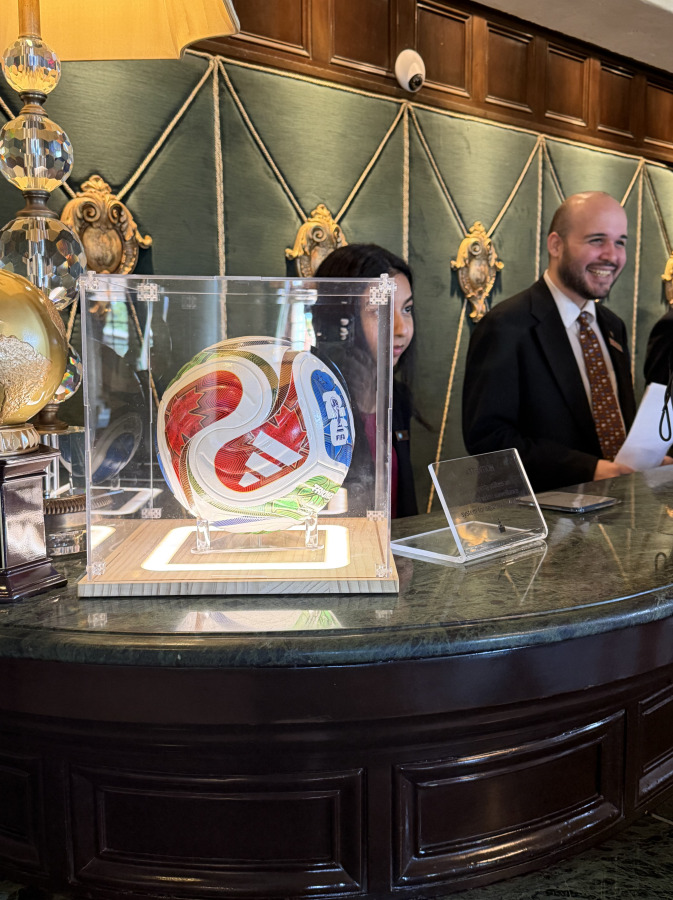
Elsewhere the city is getting into the spirit, with a giant Trionda match ball on Giralda Plaza (perfect for selfies) and At Fink Studio on Ponce de Leon Boulevard, Uruguayan artist Daniel Supervielle’s “FANS” exhibition focuses on the people in the stands: the flag-wearers, face-painters, and screamers who make soccer feel like a matter of national importance.
The locally staged matches themselves are at Hard Rock Stadium, the rest elsewhere in North America (Mexico City, LA, etc.). The official FIFA Fan Festival is at Bayfront Park in downtown Miami. The biggest public watch parties are spread across Miami-Dade County. But Coral Gables – where FIFA decided to locate its headquarters for the World Cup – has its own soccer circuit, and it’s worth knowing how to navigate it.
There are the obvious places to watch, like Fritz & Franz Bierhaus, where World Cup matches have been drawing crowds for more than two decades. There are polished hotel bars, like those in the Biltmore, THesis and Colonnade hotels. There are Argentine strongholds like Graziano’s, Spanish stops like Bulla and Taberna Giralda, and easy sports-bar choices like Sports Grill or Bay 13.
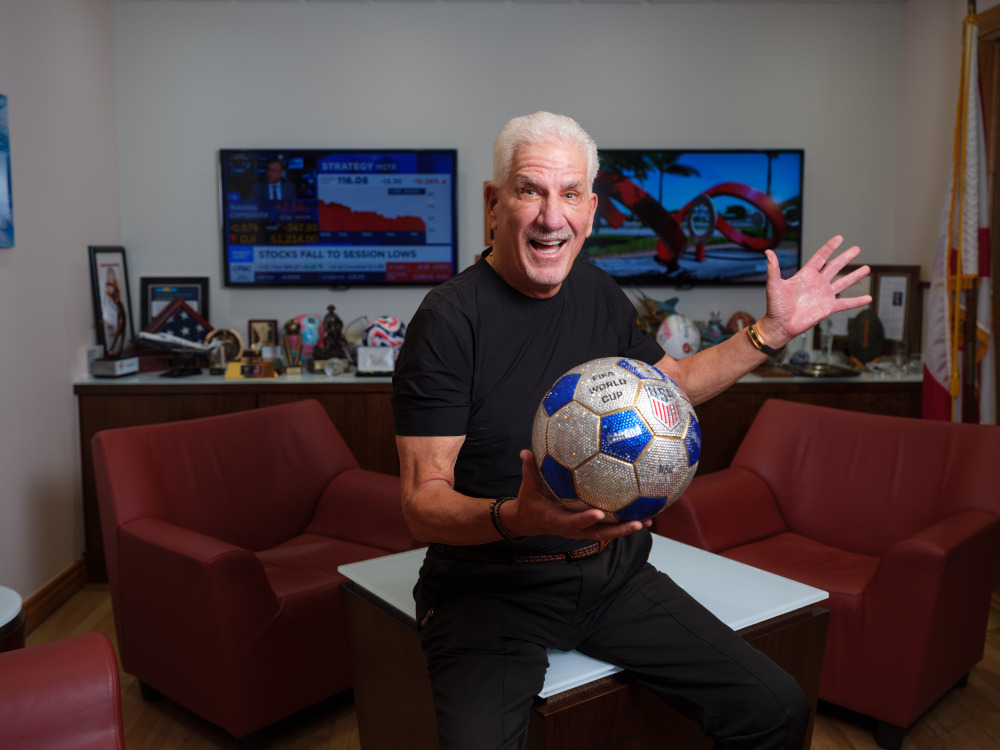
“June, July In Miami Is A Dead Time, So The Hotels Are Benefiting Big Time, Because Otherwise [They] Wouldn’t Really Have This Kind Of Business.”
Rodney Barreto, Right, Co-Chair Of The FIFA World Cup 2026 Miami Host Committee, On The Uptick In Business
FIFA’s new headquarters at Alhambra Circle has made Coral Gables part of the tournament’s business infrastructure. FIFA chose Coral Gables after a city team, led by Mayor Vince Lago, made a straightforward pitch: safety, access to the airport, free trolley service, two Metrorail stops, a strong restaurant scene, hotels, and an international community with 22 consulates. “We didn’t provide them with any incentives,” says Lago. “We didn’t have to.” Rodney Barreto, co-chair of the FIFA World Cup 2026 Miami Host Committee, also sees the FIFA choice in similarly practical terms. “Coral Gables is the most likely place for them to locate,” he says. “It has multinational headquarters for a lot of companies here.”
HOW FIFA LANDED ON ALHAMBRA CIRCLE
For more than a century, FIFA’s institutional center of gravity has been Zurich, the capital of Switzerland. The geography of the 2026 World Cup changed that. It is the first tournament shared by three North American countries – the United States, Mexico, and Canada – and the first with 48 teams.
South Florida was long favored as the location for FIFA’s 2026 World Cup headquarters, for a variety of reasons that included the diversity of its international residents and the sizeable populations from soccer-mad Latin nations. Over time, FIFA narrowed its choice to either Miami or Coral Gables. The city’s economic development team, led by Belkys Perez, brought the opportunity to the mayor.
What followed was a round of preparation inside City Hall, ready to tout assets that included proximity to Miami International Airport plus a slew of consulates, law firms, banks, private dining rooms, hotels, and enough international fluency that FIFA would not feel out of place. In the Gables, a global sports organization could hold legal conferences, host a delegation, put up executives, and find world class dining within a few blocks. “We ended up scheduling a meeting via Zoom with the FIFA brass to discuss why Coral Gables was the perfect spot for FIFA to set up shop in preparation for the 2026 World Cup,” says Lago.
The organization ultimately chose 396 Alhambra Circle, walking distance from Giralda Plaza and Miracle Mile. FIFA officially opened its Gables office in 2024, initially transferring about 100corporate employees from FIFA headquarters in Zurich. As the 2026 tournament drew closer, the employee roster rose to more than 300, a boon for the Gables. “The publicity is untouched, unmatched,” says Lago. “When they mention the 2026 World Cup, they mention that FIFA headquarters are located in the City Beautiful.” And the economic impact spreads well beyond ticket holders. Barreto compares it to the Super Bowl, where thousands come just to be near the atmosphere. “Even if you get a tiny percent of a country that’s going to come here,” he says, “we’re going to do really well.”
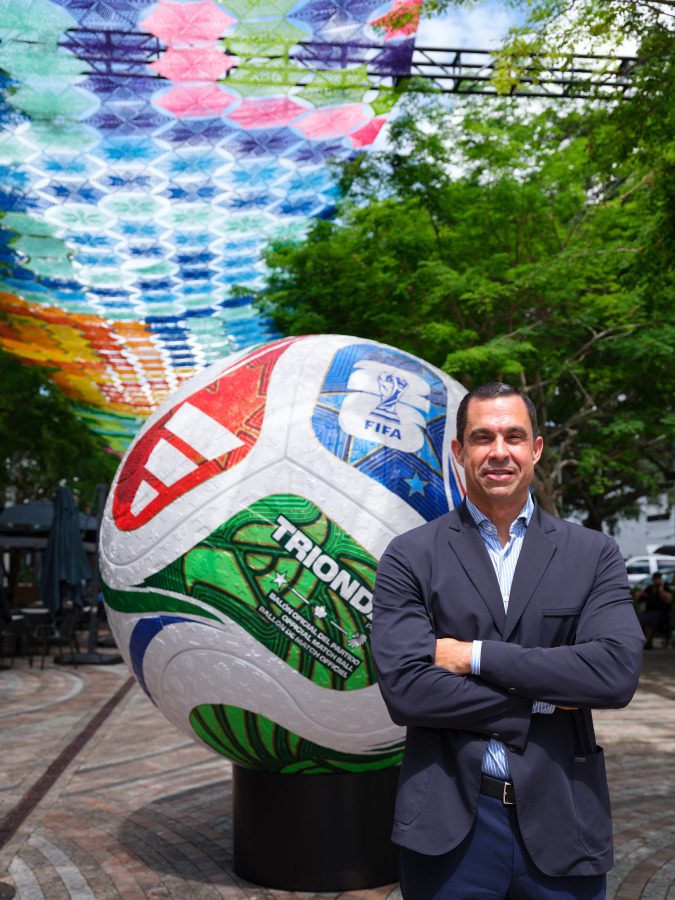
“The Publicity Is Untouched, Unmatched. When They Mention The 2026 World Cup, They Mention That FIFA Headquarters Are Located In The City Beautiful…”
Mayor Vince Lago (Left On Giralda Plaza), Led A City Team To Convince FIFA To Locate Their Headquarters In Coral Gables
THE BUSINESS BEHIND THE BUZZ


Left: Soccer Fans Line Up In The Evening Outside Fritz & Franz Bierhaus, While TV Screens Show World Cup Games To Customers At Grazianos (Right).
The financial impact of the World Cup is difficult to measure neatly because the money does not move in one obvious wave. It moves through hotel rooms, breakfast meetings, car services, catered lunches, private dinners, lease activity, public transportation, and thousands of visitors, many of whom may never set foot inside the stadium. The impact for the county is expected to exceed $1.3 billion in direct and indirect economic activity – and certainly a multi-million- dollar slice of that is coming to the Gables.
At Loews Coral Gables, the effect is easy to see. Before a recent breakfast meeting there, Mayor Lago notes, “The place was full of FIFA executives, full of people who are here – whether they’re vendors, consultants, whether they work for FIFA – in preparation of something that only happens every four years. And it’s happening in our backyard.” As for economic impact, Lago says, “It’s massive… FIFA moved in here, made their presence known immediately.”
Barreto frames the same effect on a regional scale. June and July are usually slower months for Miami hotels, he says, but this year the World Cup changed that.
“Hotels are up,” Barreto says. “June, July in Miami is a dead time, so the hotels are benefiting big time, because otherwise [they] wouldn’t really have this kind of business. And therefore, the restaurants, and obviously the transportation, it all benefits.”
The Host Committee’s role is to manage much of the region’s larger World Cup operation. Barreto describes it as a group of private citizens executing Miami-Dade’s agreement with FIFA: raising money, building transportation and security plans, producing the free 23-day Fan Festival at Bayfront Park, coordinating watch parties, creating a small business program, and working with government and corporate partners.
The work is not always glamorous. Barreto says that raising private dollars was one of the bigger challenges, in part because FIFA controls which sponsorship categories local organizers can pursue. But the economic reward is there. Barreto explains how he met with a group of Scottish fans bringing 1,500 people to Miami with no intention of going to the match. They were coming to be near the event, to cheer their country, to be part of the atmosphere. A stadium may hold 65,000, but the event spills far beyond the seats.
BEFORE FIFA, THERE WAS INTER MIAMI
“We Are Not Expecting Hostile Crowds, But Exuberant Crowds. They Are Celebrating And Not Protesting, And That Is A Big Difference…”
Police Chief Ed Hudak, On Preparing The City For World Cup Fans At Scheduled Events And Impromptu Watch Parties
The World Cup has elevated the game of soccer in South Florida, but the sport’s local rise did not begin with the tournament. Even before Lionel Messi turned Inter Miami overnight into shorthand for the sport, the club’s business roots ran through Coral Gables. The club’s early offices were located at Douglas Entrance, and the Mas family – co-owners of Inter Miami and of Coral Gables-based MasTec – was catalytic to the ascent of soccer in Miami.
“I’ve got to give credit to the Mas brothers from Inter Miami, who brought Messi here,” Barreto says. “They really brought [soccer] forward in record time,” luring the greatest player of all time to Miami with a groundbreaking contract that included an equity stake in the franchise, a share of revenue from Apple’s MLS Season Pass, and partnerships with major brands like Adidas (along with paying him between $70-$80 million annually.) Shortly after, kids wore pink to school.
BEYOND THE CELEBRATION
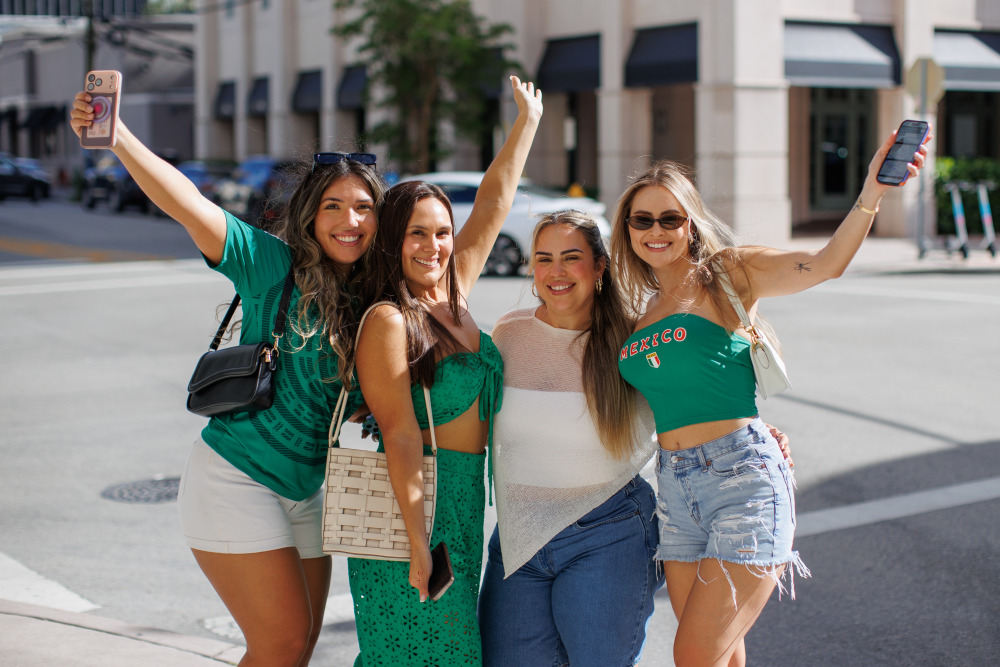
While the fun side of the World Cup is easy to see, the public safety side is designed not to be. Police Chief Ed Hudak says Coral Gables has been planning with federal, county, and state partners for two and a half years. Beginning with the tournament’s opening stretch, the city prepared a field force of 40 to 50 officers in a state of readiness – available to respond in Coral Gables or assist with FIFA-sponsored events elsewhere, including the Miami Fan Festival. The department’s concern is not only the scheduled events. It is the spontaneous ones: an impromptu watch party, a crowd spilling out after a dramatic match, a celebration that moves from a bar to the street. Hudak says the department is prepared to respond if crowds gather in places like the Plaza, Giralda, or along major roads.
“We are not expecting hostile crowds, but exuberant crowds,” Hudak says. “They are celebrating and not protesting, and that is a big difference.” But, if Lejeune Road is blocked by revelers, “we will clear the street,” says Hudak. “Our job is public safety, and life safety issues.”
The city is also watching for less visible problems. “We have the FIFA international headquarters here in Coral Gables, and we are very aware [of potential problems], so we have IT watching for cyber threats,” says Hudak. And the city is watching for illegal short-term rentals, since Airbnb usage is spiking in Miami for the tournament. Short-term rentals are not permitted in Coral Gables, precisely to prevent noisy parties. “Code enforcement and fire [dept] will be involved to make sure peace in the neighborhoods is intact,” says Hudak.
The final World Cup game will be played July 19 at MetLife Stadium in New Jersey. By then, Miami’s matches will be over, watch parties will have thinned out, and restaurants will have started returning to their regular programming. Bayfront Park will come down, flags will disappear. Some jerseys will go back into closets until the next major tournament.
Yet, FIFA’s office will still be on Alhambra Circle, with a core of more than 100 employees remaining to fly the World Cup organization’s flag and bring ongoing recognition of Coral Gables’ place in the firmament of soccer. “We’ve always been a hidden gem,” says Lago. “But now we’re being exposed to the world.”
Barreto believes the largest legacy may not be corporate at all. It may be a generational embrace of “the beautiful game” as Brazilian soccer legend Pelé described it. Says Barreto: “I think the biggest legacy that will be left behind is that this generation of children are going to be playing soccer.