

How Green is my City
|
Getting your Trinity Audio player ready...
|
Vince Lago’s 10-Year Mission to Populate the City With More Parks
Photos by Rodolfo Benitez
Mayor Vince Lago has a long list of accomplishments he is proud of having achieved since he was elected as the city’s youngest mayor in 2021. Among them is convincing FPL to underground their wires, protecting the city’s AAA bond rating, funding the Underline, reducing the “unfunded liability” for city pensions from 50% to 20%, buying and restoring the Fink building, creating a $50 million reserve for emergencies, adding a fourth fire station – the list goes on. But what he may be most proud of, in terms of legacy, is his dedication to expanding the city’s park system.
A key moment in that mission took place in late August, when the City Commission voted unanimously to permit more students and structures at the University of Miami in exchange for UM giving the city the “Lee Lincoln” property, a 5.52-acre parcel at the intersection of Granada and Ponce de Leon boulevards, which was renamed Centennial Park and pledged to forever remain a “passive park” within the City of Coral Gables.
“This is a historic moment,” said the mayor. “We’ve been waiting for this for ten years… it’s has been a long road.” Lago remembers playing in the open space of the (then) Lincoln field as a kid, when his family home was near UM. “I never stopped thinking about this.”
Centennial Park may be the jewel in the crown of the park system – among other things, the largest in the city – but is far from the only acquisition and expansion of the system since Lago first became a City Commissioner in 2013. Before he became Vice Mayor in 2019, he wrote legislation that put aside money from developer fees for the purchase of property for parks, and for upgrading existing spaces, such as the current $6 million remake of Phillips Park.
“Since around 2016 or 2017, we have accelerated the pace [of park expansion] and brought in new properties,” says Fred Couceyro, director of the city’s Community Recreation Department. “[Lago] started a capital line item [in the budget] to make sure to put in money for the purchase of park properties. It’s been important for him.”
When a city department becomes aware of land that can be developed as a park, they alert the mayor. The goal: to create a system where every resident is within a 10-minute walk in a park. “We are 85 percent of the way there now,” says Couceyro.
Most of those purchases, usually of empty lots, have led to “pocket parks” in residential neighborhoods. Examples are Gateway Park, from a .33-acre lot at 142 SW 37th Ave., where Ponce bends just south of the Flagler Street Publix, or two empty lots on Lisbon Street, between San Benito and Santa Cruz avenues, bought and converted to Lisbon Park. The tougher challenge for Lago has been the downtown, an area which had only one park – Ponce Circle Park – when he came into office. He considered the absence to be a deficiency for the city.


Left: Vice Mayor Rhonda Anderson, Saving a 70-Year-Old Sausage Tree for Alexan Roxy Park
Right: David Lawrence Jr. and Family Park, the Most Recently Completed Neighborhood Park
“I was very blessed that, when my parents were finally able to afford, they took the family to places in Europe, like Spain, where I noticed that every great city had exceptional open spaces – plazas and parks where people could congregate and come together and really build community,” he says. “So, I envisioned the city using our zoning code, which is very restrictive, to negotiate with developers and say, for an increase of height of maybe one floor, or an increase in density that would have a very limited impact, we could make [creating a park] as part of the deal.”
In some cases, the developer owned adjacent lots that could be used. In other cases, the developers agreed to set their buildings footprint. Take the Alexan Roxy apartment complex, for example, which was just completed on Salzedo Street between Catalonia and Malaga avenues. Says Vice Mayor Rhonda Anderson, “I advocated [for a park] as a resident in the neighborhood, because we wanted green space and not wall-to-wall cement; the building as designed went all the way to the property line. Instead, we pushed the building back. Okay, it made it a little narrower, but we ended up with a 50- by 100-foot park that otherwise would not have existed, and it’s beautiful.”
In the case of Regency Parc, the city commission granted an additional 14 feet – enough to build a signature cupola on top – in exchange for a 10,000-square-foot park across the street on Almeria Avenue, property also owned by the developer, Codina Partners. “No one can tell you that they know the difference between a 15-story building and a 16-story building,” says Lago, “but the value [of an extra floor] is significant for a developer, especially as buildings become more and more expensive.”
Residents tend to agree with the concept of trading height for more park space. When the Cora project adjacent to Shops at Merrick Park was being designed – in one of that neighborhood’s last open spaces – a residents’ meeting was held. “The residents had two choices,” says Anderson: to leave the building as designed, or squeeze it a little bit taller and leave green space next to it. “They chose the slightly taller building in order to have that green space, which they could enjoy at ground level. As many people have told me, it’s how the building meets the ground, and what the amenities are that people can enjoy at ground level, that are most important.”
All told, the mayor’s campaign to create parks in the downtown has now netted five new spaces in addition to Ponce Circle, which itself is undergoing a $12 million redesign, paid for mostly by developer’s dollars from The Plaza Coral Gables (the Agave Group) and nearby Ponce Park Residences (the Allen Morris Company) – the latter of which will oversee the construction of a band shell, elegant flanking columns, and a public art installation. The latest of the new downtown parks is 130 Almeria Avenue, now a parking lot owned by the developers of an adjacent new building slated to rise.


Ponce Circle Park With Elegant Flanking Columns and a Public Art Installation
“It is unique to create a downtown park once you have a built your [park] system,” says Couceyro. “When there is already a developed city, finding land downtown is difficult.” Nonetheless, says the city’s director of community recreation, “Downtown parks are very important. From a park’s perspective, it’s the mark of a good system. These are communal meeting spaces in areas that are essentially commercial in nature. They become popular spaces, not just in the traditional sense of a playground, but as a place of respite, to take a walk, to rest on a bench.”
For Lago, that is the legacy he wants to leave. “In 20 years, they won’t remember my name. But they are going to see a park like Centennial, and say, “Man, I wonder how that was saved.”
A Greener Downtown
The Mayor’s Quest to Create a Network of Downtown Parks

Since becoming a Commissioner, Vince Lago has championed the acquisition and expansion of parks citywide. Since becoming mayor, Lago has added an additional agenda: to create green spaces downtown, as the measure of “a world-class city.” Here are six downtown spaces already completed or committed to a future space for a public park.

Publix Park
At the intersection of Valencia and Salzedo, Publix supermarket will donate a 20,000-square-foot park as part of a deal to build a new Publix slightly to the west on LeJeune.
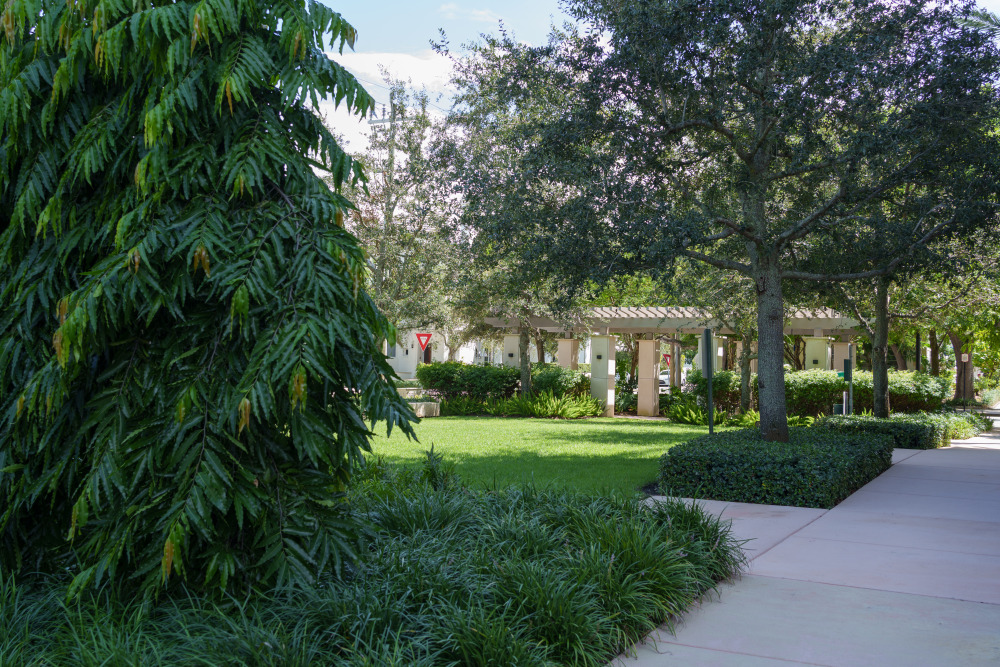
Villa Valencia
As part of permitting for the Villa Valencia condo, the developers agreed to provide a 7,500 square foot park on Hernando St. at Valencia Ave. Now complete.
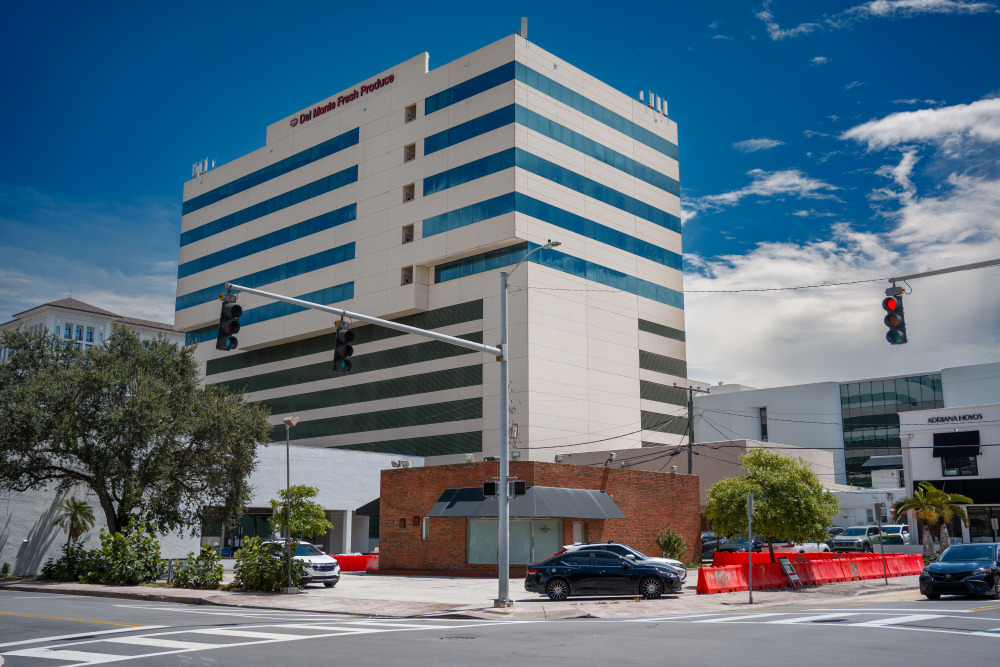
Regency Park
In exchange for an additional story of height at the Regency Parc project, Codina Partners agreed to donate a 10,000 square foot park on the corner of Almeria Ave. and Salzedo St.
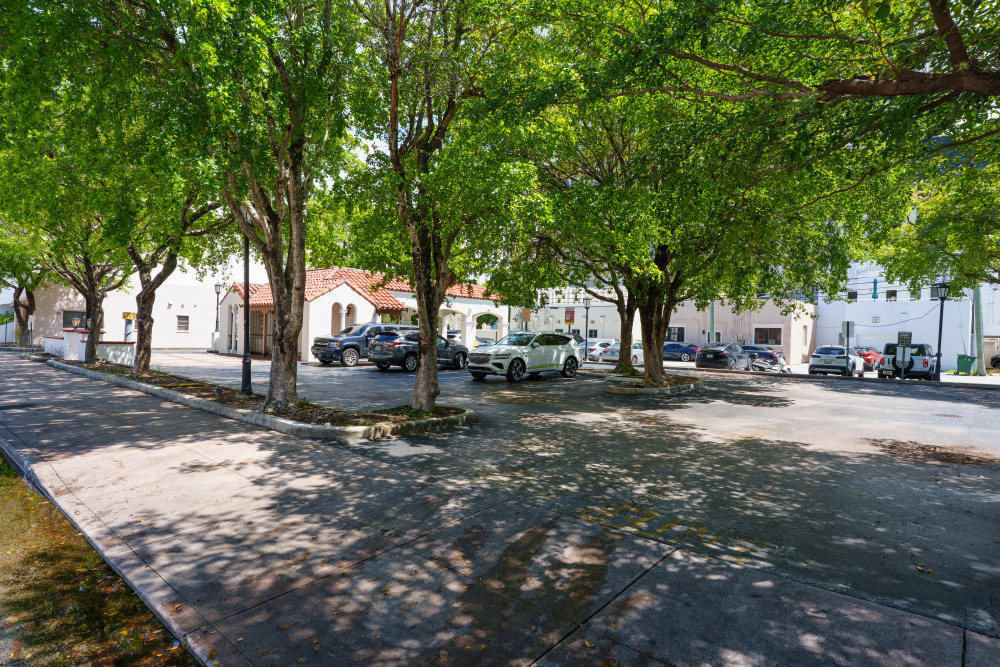
130 Almeria
A little-used city-owned parking lot will be converted into a 12,500-square-foot park
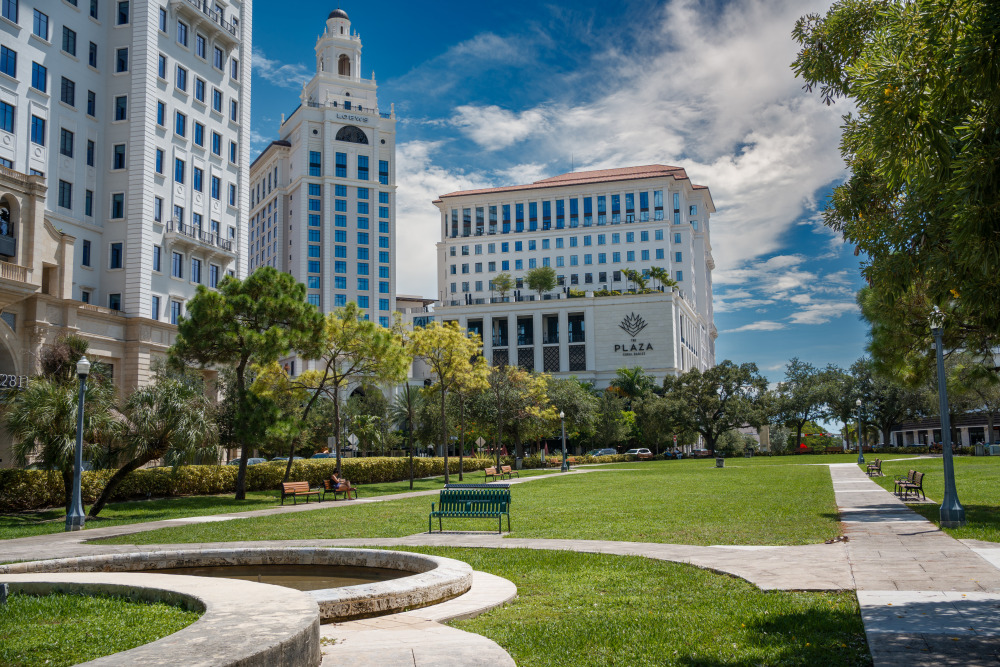
Ponce Circle Park
The Fred B. Hartnett Ponce Circle Park has long been a large, empty and poorly maintained open space used occasionally for concerts and art installations. It will now be transformed into an elegant space with columns on its flanks, a concert shell on the south end and a large a Frank Stella sculpture on the north end, at a cost of $12 paid by adjacent developments (The Plaza Coral Gables and Ponce Park Residences).
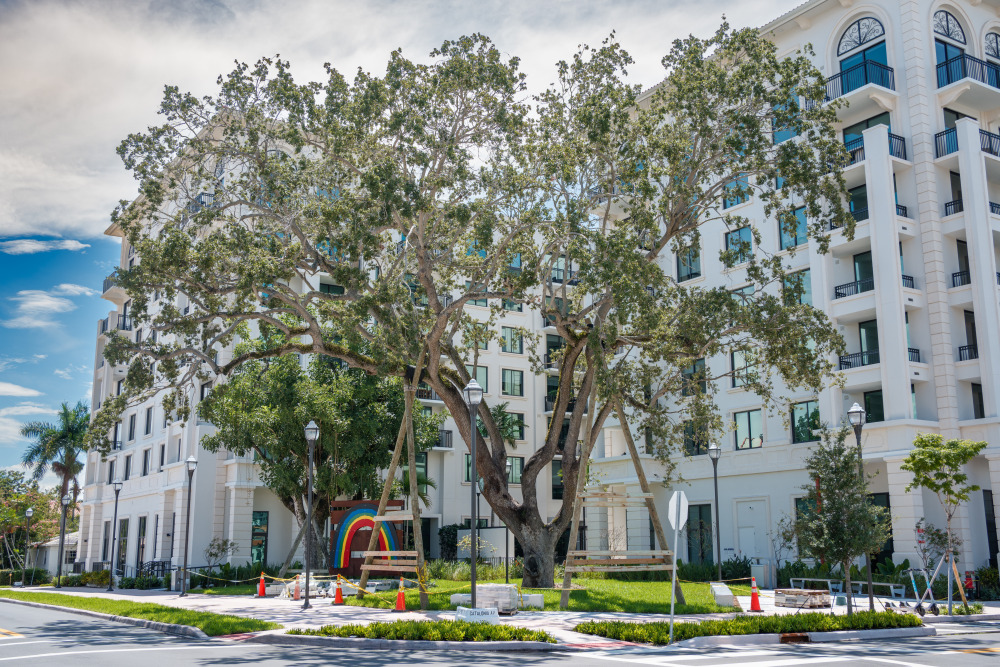
Alexan Roxy
(Formerly Alexan Crafts)
This 5,000 square-foot pocket park was donated by the developers of the Alexan Roxy apartment building in exchange for a slight height increase. It is now home to two mature trees moved from another development.