
A Drink (and a Bite) at the Dojo
|
Getting your Trinity Audio player ready...
|
There are only eight masters of sake in the world – and one of them is now in Coral Gables.


Left: Haider Hachem & Marilyn Orozco
Right: Hachem graduates in Japan to become the sixth master of sake in the world
By nightfall, Threefold Café on Giralda Plaza is usually closed. It’s only recently that passersby may have noticed the formerly dark storefront come alive with lights on weekend nights. Inside, you won’t find a breakfast-for-dinner concept, or a late-night coffee brewing session – you’ll find sake master Haider Hachem, the owner of Shōjō’s Dojo, Florida’s first sake brewery.
Hachem doesn’t look like a typical sake brewer. For starters, he’s tall, broad, and Hispanic, and at first impression seems like he would enjoy a craft beer over a tokkuri of sake. Indeed, that’s what he first started doing: brewing beer at Strange Beast Brewpub in West Kendall. But Hachem also has a passion for Japanese culture, and “when he found out that sake was brewed just like beer, he basically self-taught himself,” says Marilyn Orozco, Hachem’s wife and business partner. Or, at least he tried. After one “drinkable” brew, Hachem applied for the Sake Sommelier Academy’s Master of Sake program, a competitive and immersive course which takes place at a 176-year-old brewery in Japan. He was accepted and completed the course, marking him as the sixth Master of Sake in the world (there are now eight).
With that mastery under his belt, Hachem and Orozco – a sake sommelier herself – joined forces to create Shōjō’s Dojo, which is now popping up at Threefold Café Thursdays through Saturdays from 6 pm to midnight, and from 6 to 10 pm on Sundays. They’re joined by Pin Pan Pollo, which offers up a range of Asian-inspired chicken dishes. As part of his training, Hachem spent two months in Tamba, a rural city in Japan’s Hyōgo Prefecture. “It was a beautiful experience,” he says. Despite a language barrier, “I became a part of the family. From day one, they accepted me as one of their own.”
Orozco says the difference between Hachem’s first batch of home-brewed sake and his first post-certification was “night and day.” “You could taste the difference. What he learned in Japan wasn’t just how to properly brew sake, but also patience,” she says. “When he was back here teaching himself, he became impatient. And sake is a very spiritual liquid. You have to be patient.”
The two explained some of the Japanese sake brewing traditions to us. First and foremost is an offering to the sake gods on the first day of every month, usually at a dedicated shrine within the brewery where the whole team prays not only for themselves, but also for the people who drink their sake. Even more interesting is the psychological aspect. “When you come into a brew day, you can’t be angry,” Hachem says simply. Orozco explains further: “When you’re dealing with the rice and the koji” – a mold used in sake brewing to convert starch into sugar – “you’re stirring everything exactly,” she says. “So, if you’re angry, you’re going to stir angrily. That energy transfer between the brewer and the sake shows in the product, and that’s a big thing he [Hachem] came back with. He’s a lot calmer when he’s brewing now; more confident, more patient. If something goes wrong, he knows how to take a deep breath and say, ‘This is how I messed up. This is how to fix it.’”
Hachem and Orozco’s philosophy, which is also the slogan of Shōjō’s Dojo, is “Honoring traditions while brewing new ones.” While both have now spent significant time in Japan, including brewing together in Tamba, they are ready to create their own sake variations. “Right now, we’re brewing true to style, but eventually we do want to have fun,” says Orozco.


L to R: Brewing sake begins with the rice; Sake cocktail, Shojo’s variation; Asian-style fried chicken; Asian-style sesame chicken.
Initially, Shōjō’s Dojo was a bit of a dream. Its original location, in a warehouse district near Glenvar Heights, was a funky, dimly lit space that Orozco and Hachem opened within two weeks of acquiring the lease. Some two years later, the property owner sold, prompting the husband-and-wife team to move to Threefold Café, if only temporarily.
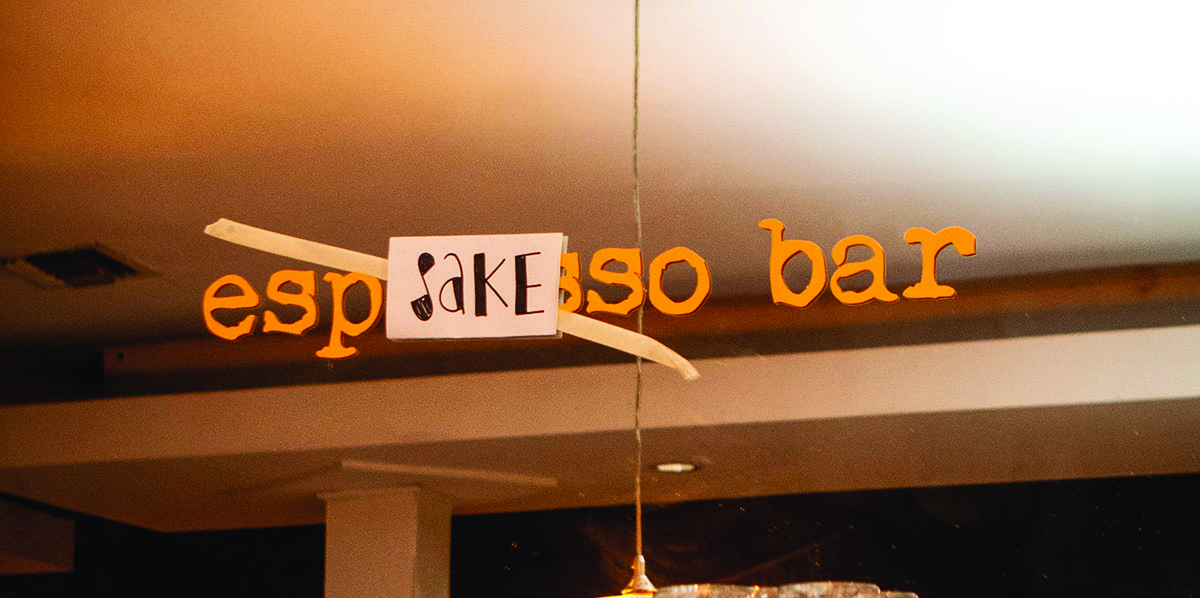
Here, Shōjō’s Dojo is a smaller operation, though still with the same character. After Threefold closes, the small staff gets to work, adding their own improvised “sake bar” sign over the café’s “espresso bar” etching, and setting up shop for a long night of brewing, pouring sake cocktails (yes, cocktails), and doing tastings, which Hachem will walk you through for an added fee. They sell their own sake, as well as other brands, both by the bottle and in smaller portions.
The brewery itself is named after Shōjō, a mythical, sea-dwelling primate in Japanese mythology with a particular fondness for alcohol – especially sake. Hachem thought that was a perfect fit for Miami, since “[Shōjō] is always on the beach, always laughing, and always drunk.” The myth includes Shōjō’s ability to judge character. Should he find you unworthy, he will brew you toxic sake; if you are found to be worthy, “it’ll be the best thing you’ve ever tasted in your life,” says Hachem. That’s just what he and Orozco want at the Dojo: only “people with a good vibe,” says Hachem – though he promises not to brew anyone any toxic sake. Now the duo dreams of their own place – or, as Orozco calls it, “a forever home” – meaning that the sixth master of sake in the world may not be in Coral Gables for long. So, drink up!