
Puppies With a Purpose
|
Getting your Trinity Audio player ready...
|
At the University of Miami, UPUP Is Turning Campus Life Into a Training Ground for Future Service Dogs
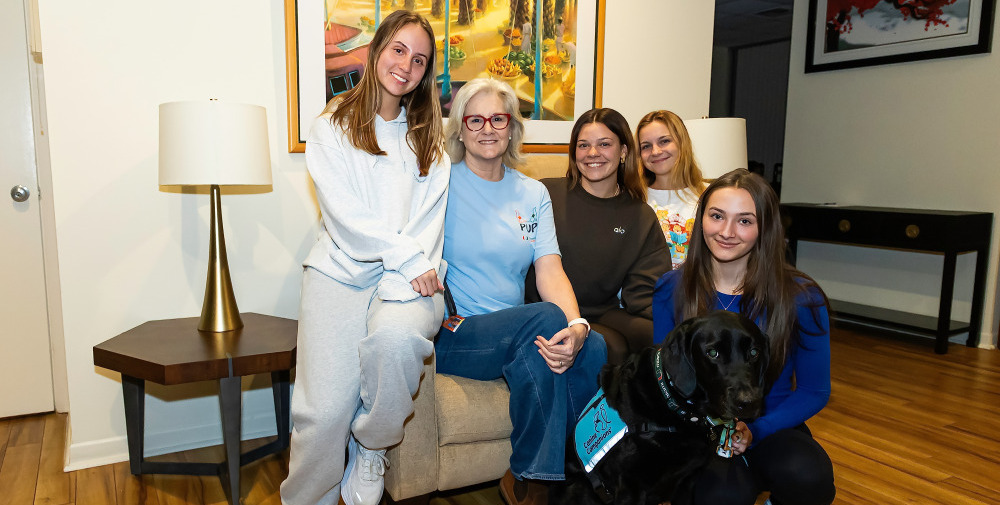
On the University of Miami campus, a puppy sleeping through class may actually be hard at work, training how to not be reactive in a new or stressful situation. That schooling is the idea behind UPup, the student organization that helps raise and socialize future service dogs before they are paired with someone who needs one.
Dr. Joy Beverly founded the club about a decade ago after seeing random students raise service dogs and wondering whether UM students might do the same with a structured program. What started small has grown to a larger canine cadre, but Beverly says the mission was never really about the hounds. “I see it more as service rather than just working with dogs,” she said.
For nursing student Amanda Acuna, that service currently comes in the form of Ryker VI, a black Labrador she received at nine months old. Ryker began his puppyhood in a Georgia prison, where inmates participating in a Canine Companions program handled his early training. Acuna’s role: introduce him to the wider world.
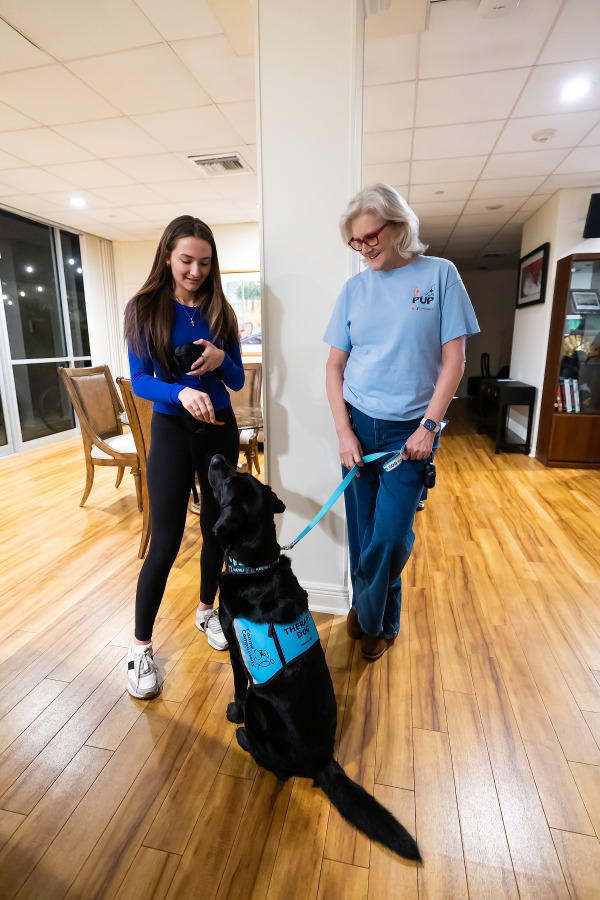
That meant walks around UM, trips to Publix, and encounters with two campus residents: squirrels and ducks. “He saw a squirrel and a duck, and he was appalled,” Acuna recalled. Her job was to teach Ryker that no matter how interesting the distraction, his handler should be more interesting. He eventually became comfortable enough that Acuna received approval to bring him to class. “He slept through every class I took him to,” Acuna said.
Raisers like Acuna spend months teaching the dogs more than 30 commands, public manners, and socialization. Then comes the handoff. At about a year and a half old, the dog leaves its student trainer and enters professional training, which Acuna said lasts roughly six to nine months.
There, Canine Companions trainers conduct medical and temperament testing to determine whether the dog is suited for service work. They also build on the puppy’s foundation with advanced skills like retrieving and holding objects, opening and closing doors, and assisting with wheelchairs. Depending on temperament and ability, a dog may be prepared for mobility assistance, hearing work, medical alerts, or other specialized roles.
For student raisers, the transition can be emotional. Once the dog is turned in, Acuna said she receives monthly report cards describing its progress. If the dog completes training, it can then be matched with a recipient and graduate as a working service dog.
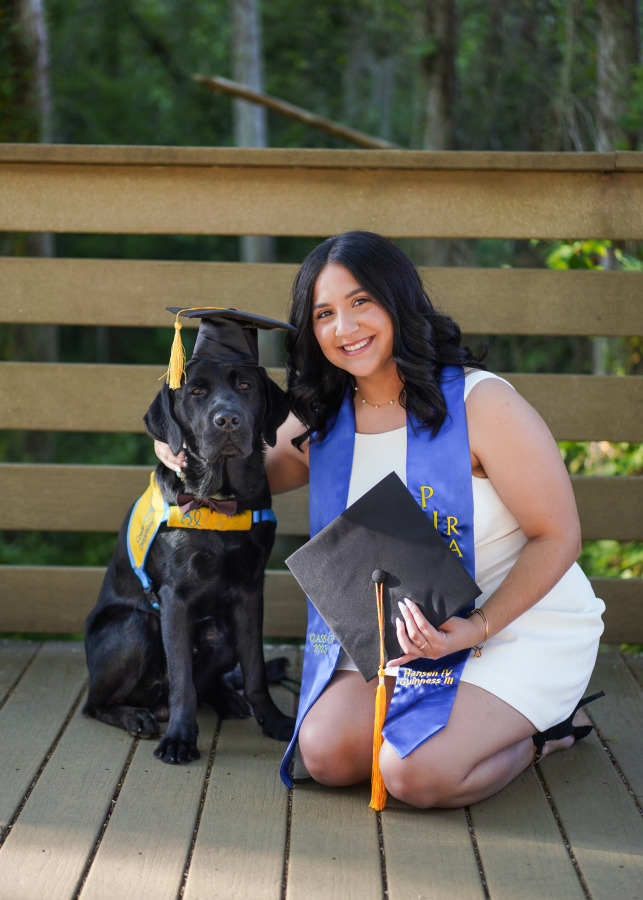
Acuna has already seen that process come full circle. Her first puppy, Hanson IV, graduated and was matched with a veteran. Her second, Guinness, was released from service-dog training after anxiety issues but later became a therapy dog. He now visits patients receiving transfusions at UHealth’s Lennar Foundation Medical Center. “Every dog has their purpose,” says Acuna.
UPup helps make the work possible with a team approach. Student trainers will step in, for example, when other students have exams or labs, and the club helps with food and supplies. Now, Beverly hopes Coral Gables families will join them by providing home bases for future service dogs while students assist with training.
For more information on how to get involved, contact Dr. Joy Beverly at joybeverly@miami.edu