
Keeping it Green
|
Getting your Trinity Audio player ready...
|
THE TREES OF CORAL GABLES ARE PROTECTED. PERIOD.
Coral Gables is one of the very few U.S. municipalities whose “city plan” has been designated a local historic landmark. In 2018 that blueprint was officially recognized by a unanimous vote of the City Commission, joining cities such as Charleston, Fort Worth and Salt Lake City, whose citywide historic preservation plans are officially recognized as landmark documents. And with that designation, George Merrick’s planned city is legally protected and, in turn, protects the city’s tree canopy and foliage.
PHILOSOPHY OF AESTHETICS
In designing Coral Gables, founder Merrick employed the concepts of the Garden City and City Beautiful movements, both popular approaches to comprehensive urban planning at the time. These models of municipal development took into account the philosophy of aesthetics, which played a major role in the movements.
Consequently, the city’s landmark plan not only protects its carefully developed urban landscape from ill-conceived projects that could detract from the harmonious built environment, but also safeguards against any potential giveaways or takeaways from the green-scape features that are an integral part of the Garden City precepts.
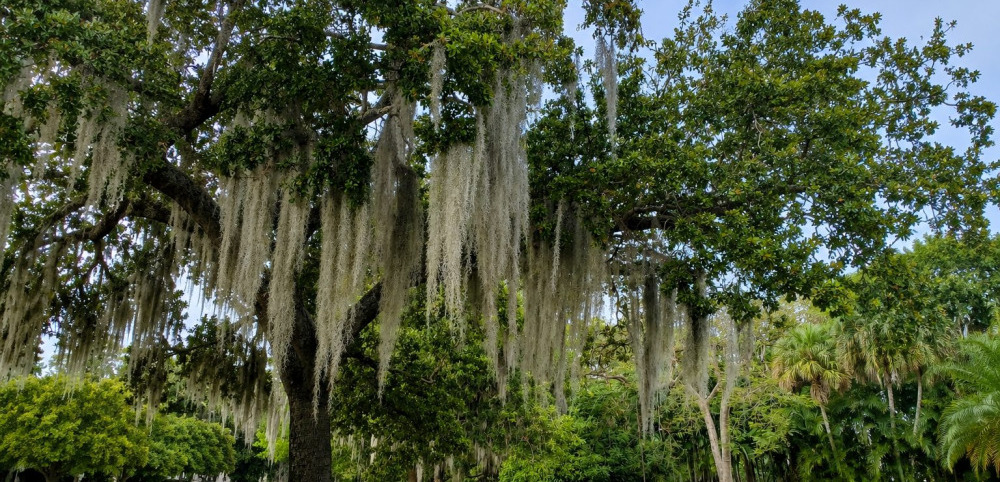
Today, that protection is appreciated all over town, where one can find beauty and solace in green corridors, sculpted water fountains, heritage trees, and old foliage. Swales are populated with beautiful Southern Live Oaks, many draped in whispering Spanish Moss, along with Gumbo Limbos, Mahoganies, Royal Poincianas, and magnificently tall Ficus trees. It is a landscape that plays tribute to Merrick’s vision for the area.
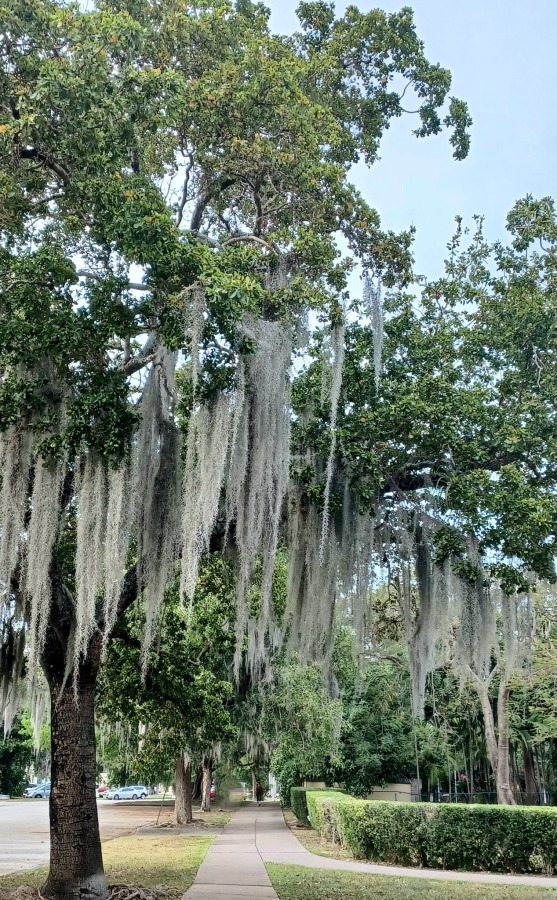
On page 32 of the city plan, Merrick stipulates exact instructions for the preservation of its trees. He states, “The new development also will take steps to save from destruction full grown trees when new buildings are erected in new sections…as all of the full-grown trees and old foliage will be kept intact…”
On page 11 of the city plan, Merrick’s master planner, Frank Button (Florida’s first registered landscape architect) observed during an assessment of Merrick’s land: “A careful study was made of the natural conditions and beauties of the property (a tract of 1200 acres) and care taken to preserve all trees.”
In honor of National Preservation Month (May), it is important to recognize the green parts of Merrick’s city plan and follow his admonition that “New development take steps to save from destruction full grown trees…and old foliage will be kept intact…” While thousands of new trees were planted along the streets of the unfolding city, trees were standing long before Coral Gables existed, and saving pieces of the inherited green scape was an important part of his urban planning dictum. Yes, Merrick was a developer, and, yes, he developed a brand new city, but he also wanted to keep the old foliage intact.
Outside of Everglades National Park, however, today less than 2 percent of the native pine rocklands remain in urban Miami Dade County. In Coral Gables, only a few areas of native rockland hammock still exist, including Camp Mahachee, the 11.5-acre tract off of Old Cutler that is owned by the Girl Scouts of Tropical Florida, and parts of the adjacent Matheson Hammock Park. To help preserve what remains in private hands, the City of Coral Gables passed an ordinance last year, sponsored by Vice Mayor Rhonda Anderson, to create a conservation-based transfer of development rights (TDR) program to help preserve ecologically significant land before it is sold or developed.
Karelia Martinez Carbonell is the president of the Historic Preservation Association of Coral Gables.
To request a digital PDF copy of the City Plan report, including the Resolution and Ordinance, please email info@historiccoralgables.org