

A New Cluster of Native Trees
|
Getting your Trinity Audio player ready...
|
The New Coral Gables Microforest Project Goes Green
By Lily Faber / Photos by Rodolfo Benitez
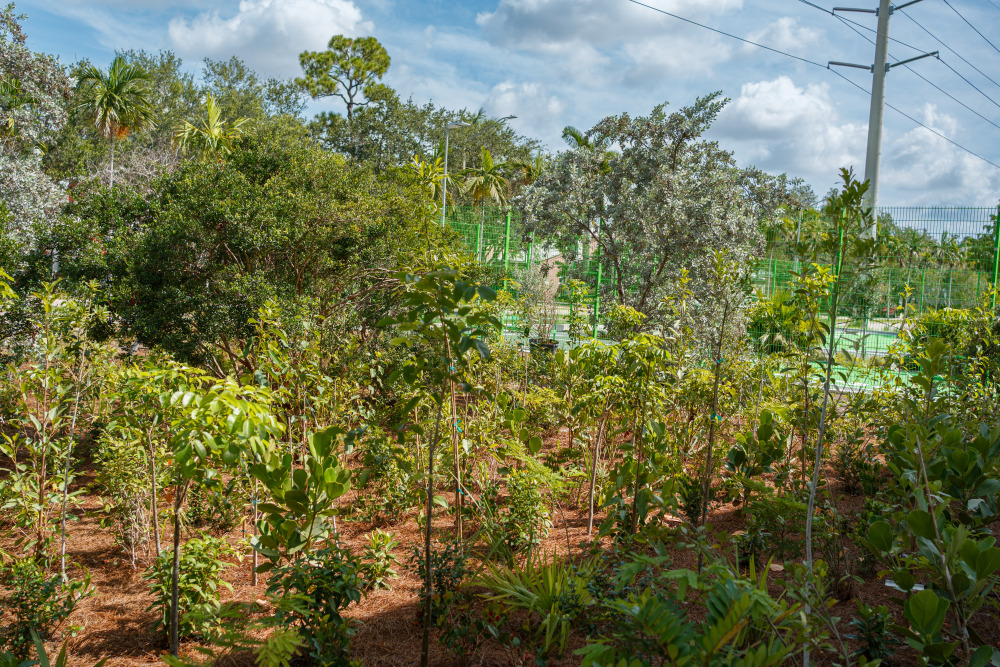
The City Beautiful is about to get greener. At the western entrance of the Gables, where Red Road (57th Avenue) meets Coral Way, a micro-forest will be planted, featuring approximately 100 different types of trees and shrubs native to Florida.
The Micro-Forest Project was first proposed by Vice-Mayor Rhonda Anderson, a fierce advocate of the city’s tree canopy known for convincing developers to save and transplant mature trees. A micro-forest is at the other end of that arboreal spectrum: a small, dense planting of native trees and shrubs that mimic a natural forest. It uses the Miyawaki method of planting, pioneered by Japanese Botanist Dr. Akira Miyawaki, in which crowded plants promote quick growth, require little maintenance once established, and due to their density help to retain moisture.
The site of the micro-forest, which will become a verdant welcome to drivers entering the Gables from the west, was chosen by the Vice Mayor and Deena Bell-Llewellyn, the assistant public works director in charge of the city’s Greenspace Division. The triangular location is a swatch of green with little biodiversity.
The micro-forest project echoes the importance of trees in the Gables, which has 39,000 trees in public spaces and 58% citywide canopy coverage, including public and private property. The benefits of this green umbrella are manifold, including reduced air temperatures, increased habitat for wildlife, reduced air pollution, and improved stormwater management – not to mention curb appeal. The new micro-forest will include meandering gravel walkways and benches for the future shade.
The micro-forest is partly funded by the Coral Gables Garden Club’s Project Canopy, an initiative that supports the planting of native and flowering trees in public green spaces and schools in Coral Gables. Thanks to a $50,000 donation from the Garden Club, the City can now begin the first phase. The landscape plans were drawn up by Deena Bell-Llewelyn, and feature native trees and shrubs, such as the Gumbo Limbo (a.k.a. the ‘tourist tree’ with its red, peeling bark), wild tamarind, Jamaican caper, Dade pine, pigeon plum, and the orange Geiger.
According to the Garden Club President Barbara Reese, “The goal is to strengthen the City’s canopy by planting trees and shrubs that attract wildlife such as pollinators, using native, environmentally friendly plants.” The Garden Club also wants to use the micro-forest as an educational site, teaching visitors about the beauty and benefits of native plants.
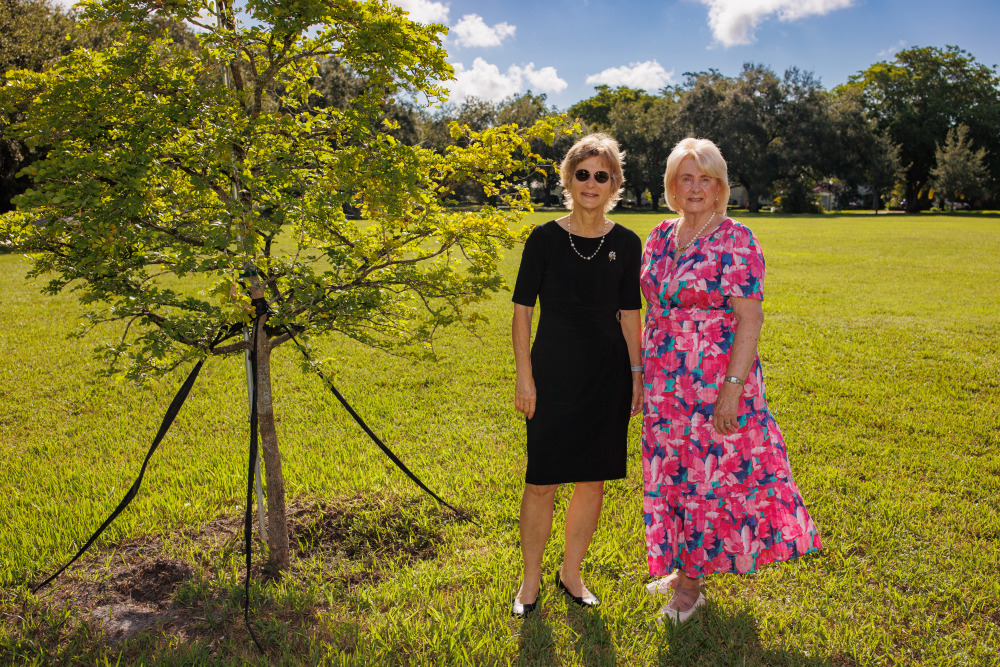
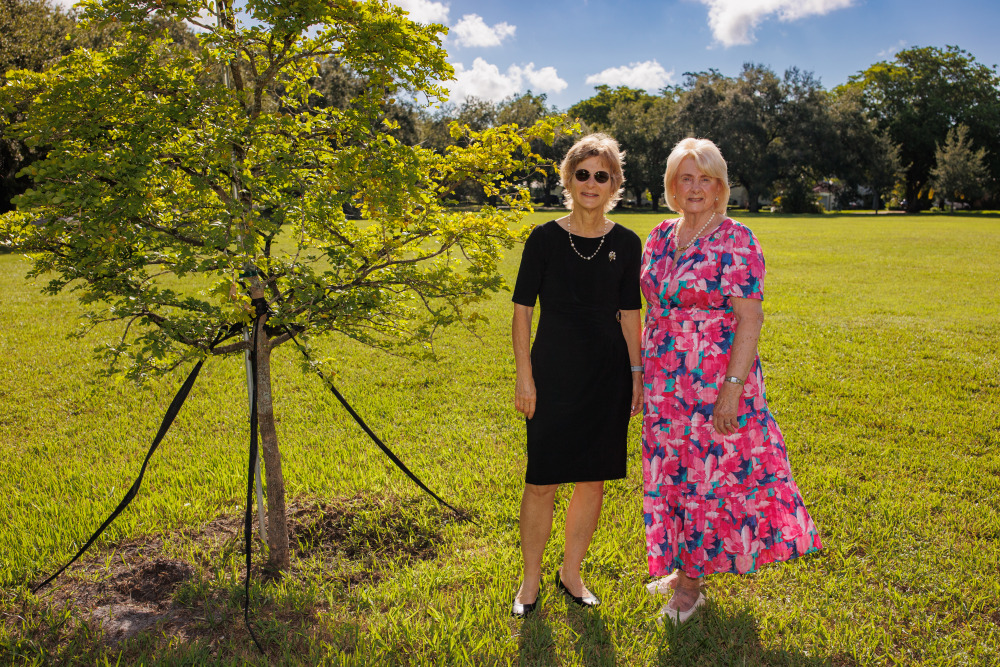
Vice-Mayor Anderson believes that people underestimate the cooling power of trees. “The fewer trees you have, the more likely you will have a desert. If we plant more of a forest and have more shade throughout our urban environments, you will have cooler cities.”
To find out more about the Micro Forest, Project Canopy, or make a donation ($500+ sponsors a tree), please visit https://coralgablesgardenclub. org/project-canopy/ or email Barbara Reese, President of Coral Gables Garden Club, at barbarareese1@aol.com.