
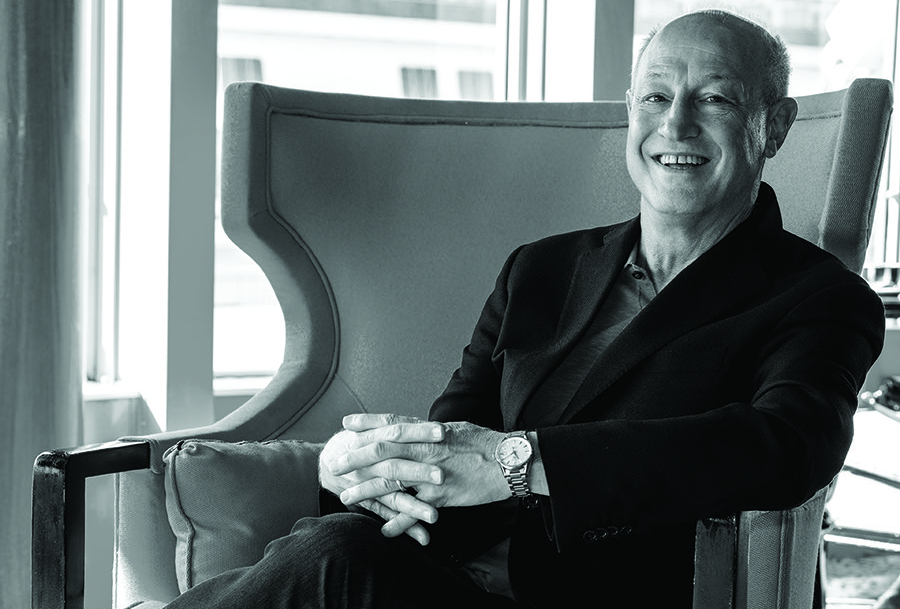
Shelly Berg
|
Getting your Trinity Audio player ready...
|
DEAN, FROST SCHOOL OF MUSIC, UNIVERSITY OF MIAMI
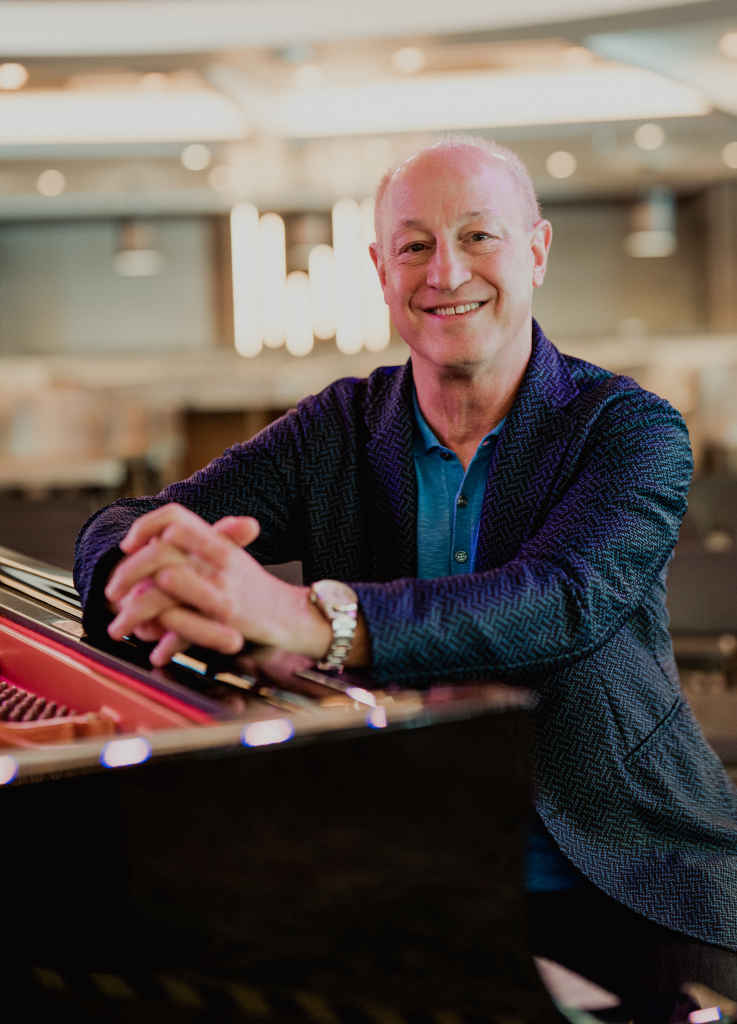
Shelly Berg was appointed Dean (and Patricia L. Frost Professor of Music) at the Frost School of Music at the University of Miami in 2007. Before joining Frost, Berg was the McCoy/Sample Professor of Jazz Studies at the Thornton School of Music at the University of Southern California and past president of the International Association for Jazz Education (IAJE). In his 19 years as dean, he has transformed the Frost School into one of the preeminent music schools in the country, dramatically expanding its staff and curriculum, raising $175 million along the way. Among his projects for Frost is the new Knight Center for Music Innovation, a $36.5 million state-of-the-art complex designed to revolutionize music education, performance, and technology in the 21st century. Berg is also an accomplished jazz pianist and five-time Grammy-nominated arranger, orchestrator, and producer. His albums have been critically acclaimed, from Blackbird (2005), Gershwin Re-imagined (2018), and Yellow Bird (2020) and to his most recent, Alegria (2024). He has also recorded and/or performed with Tony Bennett, Stevie Wonder, Seal, Lizz Wright, Andra Day, Clint Holmes, Renée Fleming, and Arturo Sandoval. He has authored four textbooks, including Essentials of Jazz Theory.
RECENTLY
Berg is retiring from his position as Dean of the Frost School of Music, effective this month at the close of this school year. He will be taking a year-long sabbatical to pursue his interests as a jazz pianist, both as performer and recording artist. To commemorate his legacy, the Frost School held a gala event in March at the Knight Center. The evening’s star-studded tribute featured performances by award-winning artists and proud Frost School alumni Gloria Estefan, Jon Secada, Trent Saunders, and Jenna Rubaii, and esteemed members of the Frost School faculty, including John Daversa, Ross Harbaugh, Kim Josephson, Chuck Bergeron, Dafnis Prieto, and Reynaldo Sanchez, among others. The university also unveiled an honor to commemorate Dean Berg’s singular leadership in perpetuity: “Shelly Berg Way,” a marked pathway on campus which represents his impact on the school and the music world at large.
WHAT HE SAYS
“I turned 70 this year, and, you know, we all think that our health and longevity and skills are going to last forever, but nothing is guaranteed to us,” says Berg. “And so I thought that that while the fingers still work and the brain still works and I’ve got my health, that it was the right time to decide that being with my wife and pursuing my musical creativity should not be the second thing to my primary vocation.” – JP Faber
A Conversation with Dean Shelly Berg


We recently caught up with Shelly Berg on the campus of the University of Miami, where he is retiring from his position as Dean of the Frost School of Music. We asked him about his thoughts and plans. Here are excerpts of that conversation.
Has being Dean conflicted with your career as a jazz artist?
it’s never felt like a conflict because I’ve been very mission driven about my work… It’s been difficult to balance my music making activities, not a conflict. It’s just required more effort.
Why did you decide to retire now?
I reached a point where I thought, “Some Day” is now. Whatever you thought you were going to do someday, that’s actually now, and that’s what made it easy to make this decision.
Will you remain connected to the university?
I’ll be on sabbatical for a year, so it’ll be interesting to see what role might be appropriate for me beyond my sabbatical, and that’s something I’ll talk to the next Dean about… I’m a tenured professor [but] I don’t think my destiny is to come back teaching five days a week. I’m hopeful there are ways that I’ll continue to add value, and continue to be part of this community.
You come from a jazz background. How did that fit in with the Frost?
The great thing about the [Frost] school is that it’s got a very large classical cohort, but it’s got a very large jazz cohort, a very large popular music cohort, and all the other degrees that people can take who play those kinds of music – whether it’s music education, music theory, music therapy, music engineering… and although my career is known for jazz, all of my higher education was in classical music.
What do you consider your highlights as Dean?
I’m really proud that the faculty have worked together to create the most distinctive and relevant curriculum in the country. And we know this because that’s what the industry tells us, and they aspire to do what we do… That’s what I came here hoping we would accomplish, and you can’t accomplish it without the faculty making it happen. So that’s number one. I think it’s also great that we attracted the Henry Mancini Institute to the school, because it’s opened so many doors of experience for our students.
The musicians you have played with are impressive.Any highlights stand out?
So many. I just went to London and recorded with James Taylor’s brother, Livingston Taylor. We spent a week together in London, had a great time, and I played on his record…. everything I’ve done with Gloria and Emilio Estefan has been just a beautiful experience…. Every time I’ve stepped onto a television stage or in a recording studio with Stevie Wonder it’s been just another level. Some people just have that presence, you know, and Stevie has it.
What is your philosophy of music?
Music is a corridor to the beauty of the human spirit. Music has a power that I don’t believe anything else does. I don’t think anything else is as unifying. That’s why I call it the mortar of humanity…you’re tapping into universal human emotions that you can reach with such honesty that the audience feels it too.
What more do you want in your career and life?
To own my own creativity, to spend enough time at the piano that I discover things I haven’t discovered yet. That’s the “more” that I want. I’ve reached an age and a point where more isn’t, well, there might have been more fame for me in the broader world, and maybe this is my chance. That has no appeal to me at this point, because what matters is how I live my life every day. You can very easily become a slave to whatever happens to you. I don’t want that. I don’t want the tail wagging the dog anymore. I want to be the dog.