
Where To See Art Now
|
Getting your Trinity Audio player ready...
|
A quick look at the leading museums and galleries of the Gables
The Lowe Museum
Cernuda Arte Gallery
The Americas Collection
The Coral Gables Museum
Garcia Art Gallery
H. Benitez Fine Art
Pedrido Arte Gallery
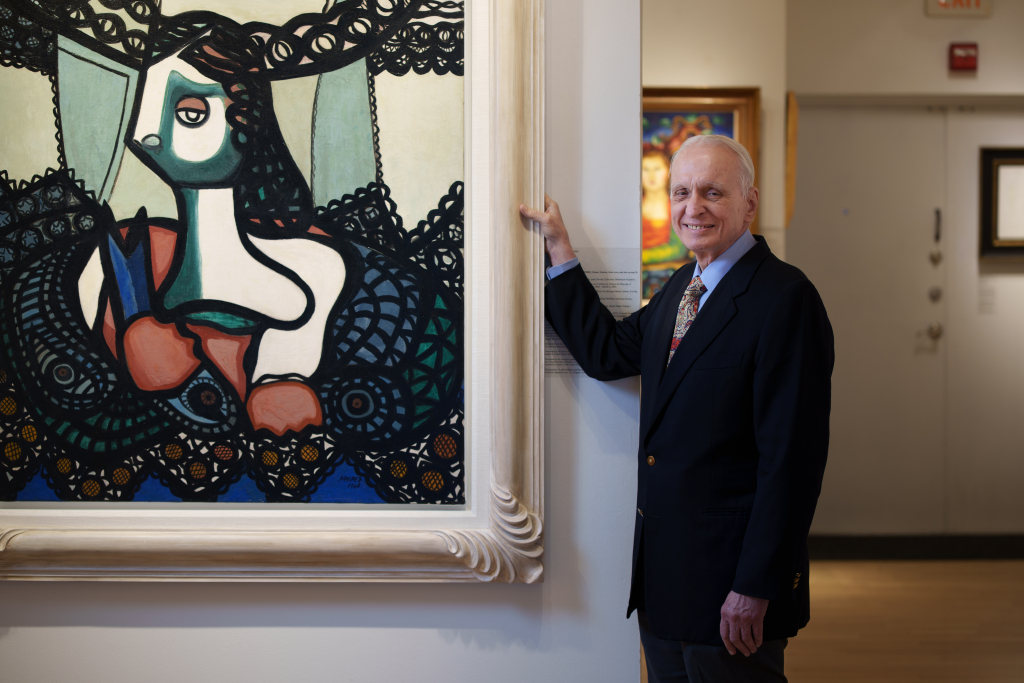
Ramón Cernuda did not set out to build one of the most important galleries of Cuban art in the United States. His path to becoming a leading authority in the field began with something far more ordinary: saving for a television set.
“I had been saving money to buy a TV set,” Cernuda recalls. “And a couple of paintings came along, and I spent the money on them… I bought the two paintings with the TV set.” That impulsive decision in 1973 laid the foundation for what would become Cernuda Arte, now a cornerstone of Coral Gables’ cultural scene. Cernuda’s journey into the art world was gradual. For years, he worked in publishing alongside his wife, running a successful company producing encyclopedias and language programs. Though profitable, it lacked fulfillment. “It was a money-making operation, but it was a boring operation for me,” he says. As the industry declined and creative control gave way to market demands, Cernuda chose to walk away and pursue his passion for collecting Cuban art. Using royalties from his publishing business, he opened his gallery in 1999. “We felt that, why not expand the enjoyment and do what we love?” he says. “We didn’t expect it to become a good business, but it has turned out.
From the outset, Cernuda made the defining choice to deal exclusively in Cuban art. What began as a personal focus evolved into one of the most comprehensive private inventories of Cuban artwork in the world, from masters like Wifredo Lam, Amelia Peláez, and Carlos Enriquez to contemporary figures such as Manuel Mendive, Roberto Fabelo, and Tomás Sánchez. Today, the gallery exhibits roughly 240 pieces across three buildings while maintaining an inventory of more than 2,500 works, with prices ranging from $5,000 to over $1 million.
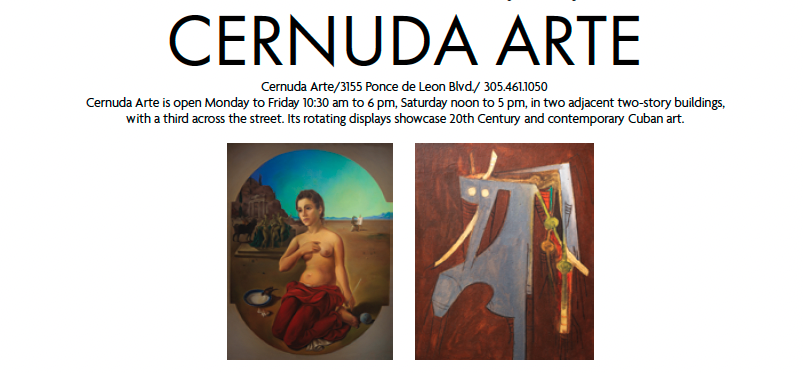
The collection spans generations, reflecting both historical depth and ongoing evolution. “I’m partial to the 20th century,” Cernuda says, “but I do recognize that there are incredible contemporary talents.”
For Cernuda, reputation is everything. Over decades, he has cultivated long-term relationships with collectors. “We get a lot of repeat business,” he says. “There is a relationship of trust.” Rather than simply selling works, he sees himself as a partner in the collector’s journey. “We’re not in the business of selling a painting,” he explains. “We’re in the business of building collections.”


That distinction is critical. It means advising clients, sometimes discouraging purchases, and thinking long-term about value and coherence. It also reflects a deeper motivation. At this stage of his life, accumulation is not the goal; stewardship is. The gallery is not just a business, but an evolving archive of Cuban cultural history that is open to the public. That perspective also shapes how he measures success. While the gallery has exceeded financial expectations, the greater reward lies elsewhere. “The satisfaction,” he says, comes from sharing art through exhibitions, deepening the collection, and serving a loyal base of collectors.
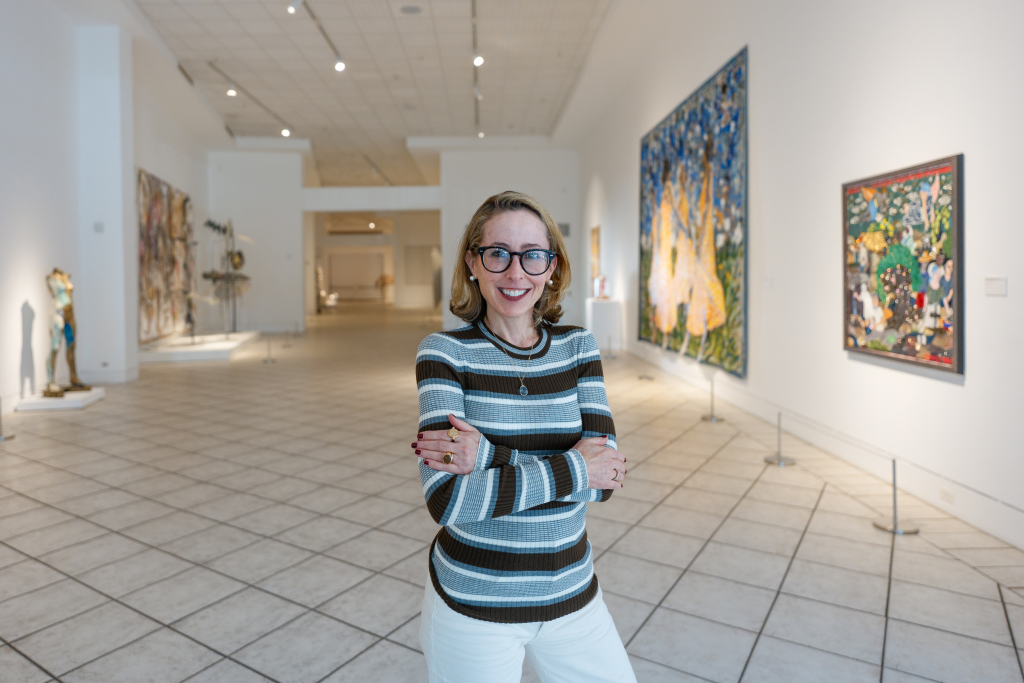
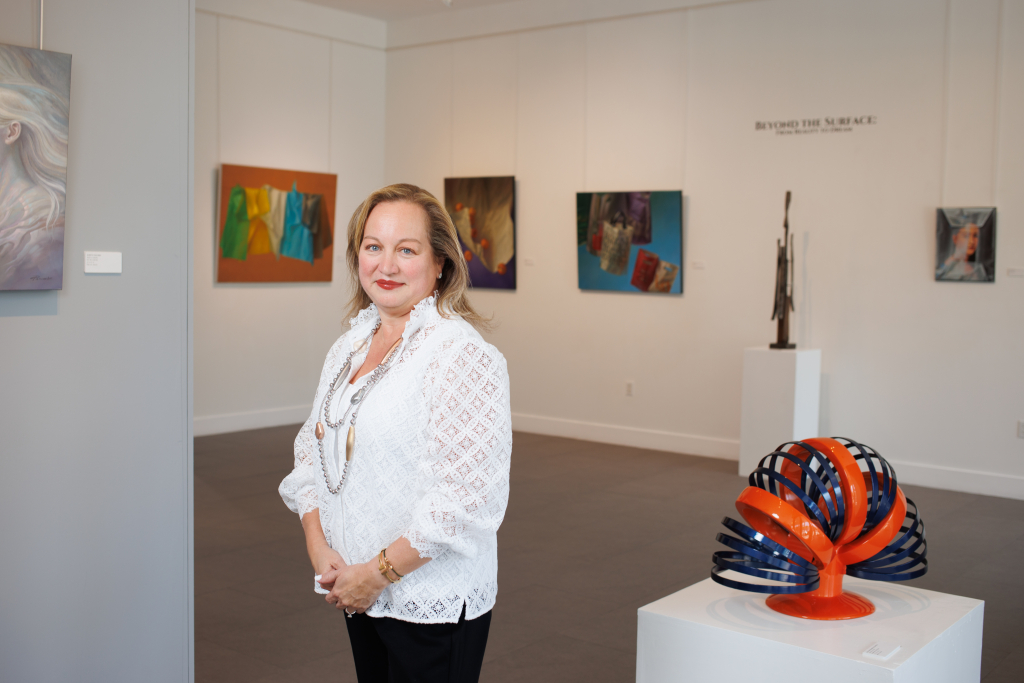
Jill Deupi moves through the Lowe Art Museum with the ease of someone who sees not just what is on the walls, but what the space means – along with what it has been, and what it must become. As executive director and chief curator, she doesn’t describe the museum as static or precious, but as something alive, layered, and purposeful.
“Our mission,” she explains, pausing in one of the permanent galleries, “is to serve the [UM] campus and the community as an invaluable resource for learning, engagement, and education through art and culture across the globe, over 5,000 years.”
That sweeping mandate is backed by a collection of more than 19,000 objects, from ancient Mediterranean artifacts to contemporary global works. Only about 5 percent is on display at any time, but the museum’s 36,000 square feet include galleries of Greek and Roman antiquities, Renaissance and Baroque art, African and Asian works, and Indigenous American art, alongside modern pieces.
Among the most striking spaces is the Palley Pavilion, a light-filled gallery of glass and ceramics. The Lowe houses seven permanent galleries alongside rotating exhibition spaces, creating what Deupi calls a “broad menu” rather than a single narrative. “It’s not a one-size-fits-all world,” she says, “and we are not a one-size-fits-all museum.”
If the galleries provide the framework, the exhibitions provide the voice. An upcoming show, El Pasado Mío, focusing on Afro-descendant Cuban artists, is designed not just to highlight injustice but to restore visibility and dignity. “We want to elevate artists who have been forgotten,” she says, particularly those overshadowed by historical and political forces. Behind the scenes, Deupi’s process is meticulous and hands-on. She prefers analog planning, using physical models, color swatches, and scaled layouts. “We lay everything out to scale,” she explains, describing how each exhibition is storyboarded and modeled before installation. It’s a reminder that curation is not just intellectual, but also spatial, tactile, and deeply visual.
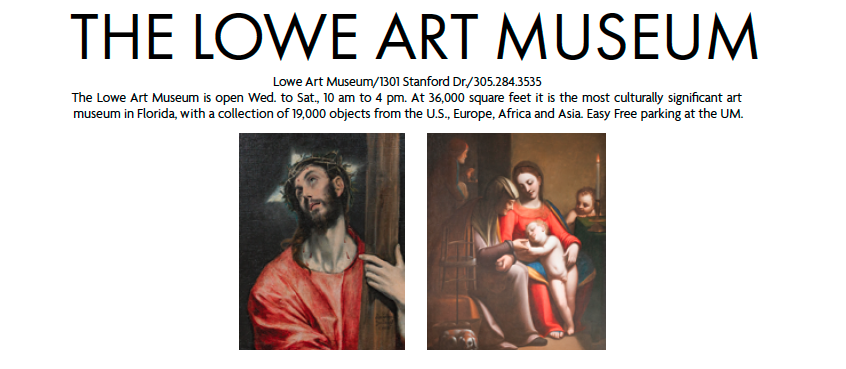
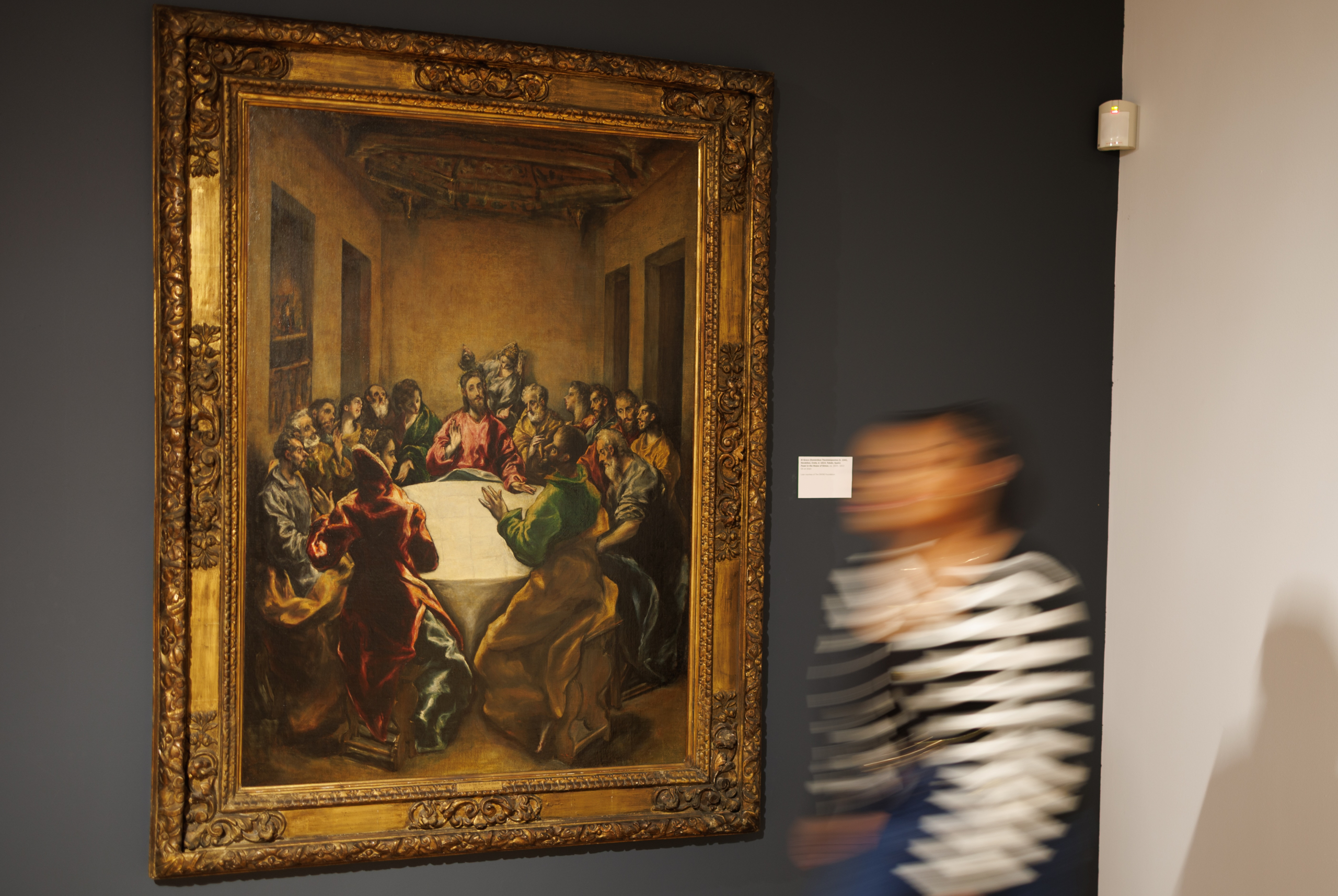
Ultimately, everything returns to the experience of art itself – the reason Deupi left law to pursue this path and ultimately become the Lowe director in 2014. Walking through the galleries, she describes a feeling central to her mission: “this sense of uplift and comfort… the adrenaline is pumping but you’re also completely at ease.” It’s not hard to understand why. The museum spans everything from El Greco masterpieces to a Pacific Northwest totem pole, Medieval religious objects, and contemporary works like William Osorio’s gigantic painting of four dancing women.


That sense of inclusion – without erasure of the past – defines Deupi’s approach. Exhibitions become conversations across cultures and time periods – a Renaissance triptych in dialogue with an Aztec sculpture, or a modern urban portrait beside a Baroque aristocrat. The result is a museum, founded in 1950, with what Deupi calls a “Janus-faced mission,” serving both the University of Miami and the broader public. She sees the Lowe as both a “hidden gem” and a cultural force waiting to be more fully recognized.
For more than three decades, The Americas Collection has been part of Coral Gables’ cultural landscape, launching on the corner of Andalusia and Ponce de Leon Boulevard (where the Cheesecake Factory now sits) and moving in 2012 to its current location two blocks south of Bird Road.
“Originally, my father-in-law started it as a love for art. He’s been a collector for the last 40 years,” says Silvia Ortiz, who now directs the gallery. A former private banker, Ortiz agreed to take over when her father approached her with the idea. “I said yes, and that was the beginning of another world, a beautiful world.”
Though initially “self-taught,” Ortiz had long been a collector herself, managing the family’s private collection before stepping into the gallery. From there, she learned the business side while building relationships with artists. “I got the privilege of sharing more intimately with the artists… creating projects with them,” she says. “Some of these artists are the artists that we now represent.”
When the gallery acquired its 4,500-square-foot space in 2012, Ortiz redesigned it with flexibility in mind – movable walls, adaptable layouts, and a hanger system for viewing canvases. “We created it the way that we wanted,” she says, “so I can recreate the space as needed.” That adaptability reflects a broader philosophy: art should be alive, evolving, and accessible.
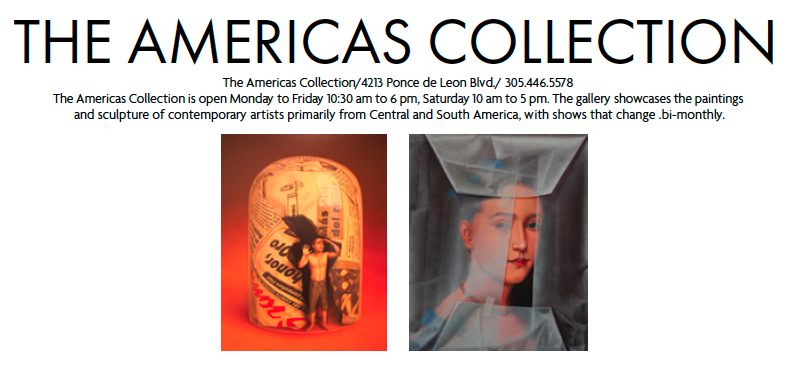
While the gallery began with a focus on Latin American artists (reflecting Ortiz’s Salvadoran roots) it has expanded to include Caribbean, Canadian, and local artists. “The Americas Collection now encompasses all of the Americas,” she says.
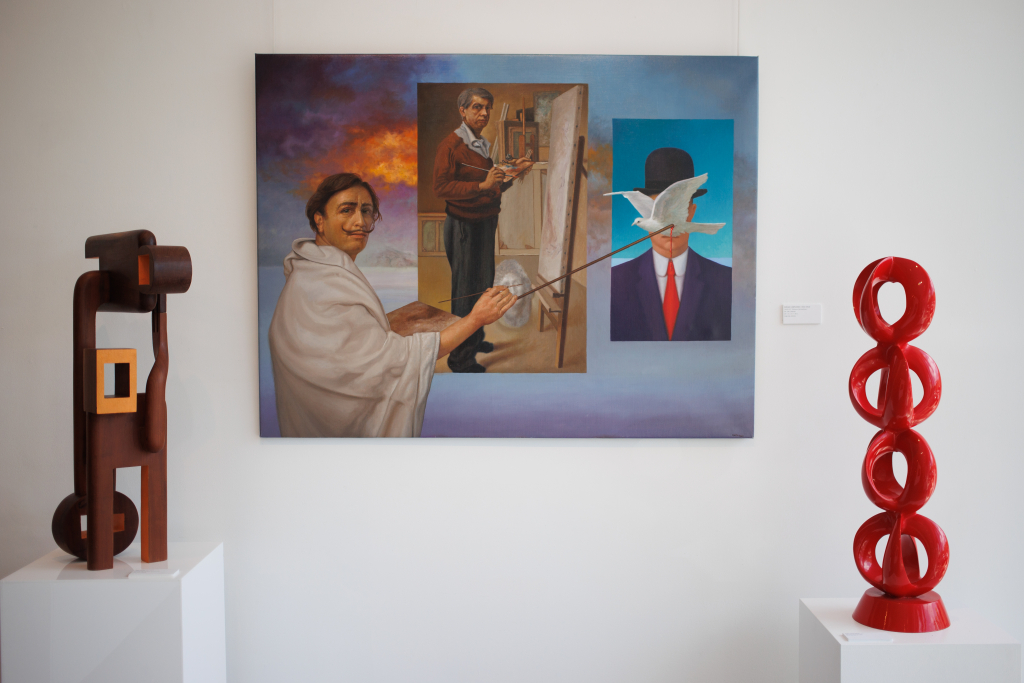
Today, the gallery represents about 30 artists, from emerging to established, with prices ranging from $5,000 to $50,000. Ortiz sees the gallery as a bridge between those worlds. “We work together to help them grow… and build their careers,” she says.
That commitment has paid off: several artists who began with the gallery have gone on to gain wider recognition, names like Ramiro Lacayo from Nicaragua, Marisa Contreras from Guatemala, Jose Perdomo from the Dominican Republic and Linda Kohen from Uruguay, who recently passed away at the age of 101. Ortiz has built the gallery not only as a showcase, as a full-service experience, offering art advisory, home installations, and collection management. Clients are even encouraged to live with pieces before committing. “We allow you to live with it for a few days,” she says.


As for her personal philosophy as a collector, discovering artists through travel, client recommendations, and online, “Art has to evoke an emotion,” she says.
Equally important is the gallery’s role in the community. The Americas Collection collaborates with museums, schools, and local institutions, inviting the public to engage with art in an approachable way. “We feel like we have the responsibility… to continue to grow that culture,” she says. “We are a hub of cultural connectivity, bringing art, culture, and community to our city.”
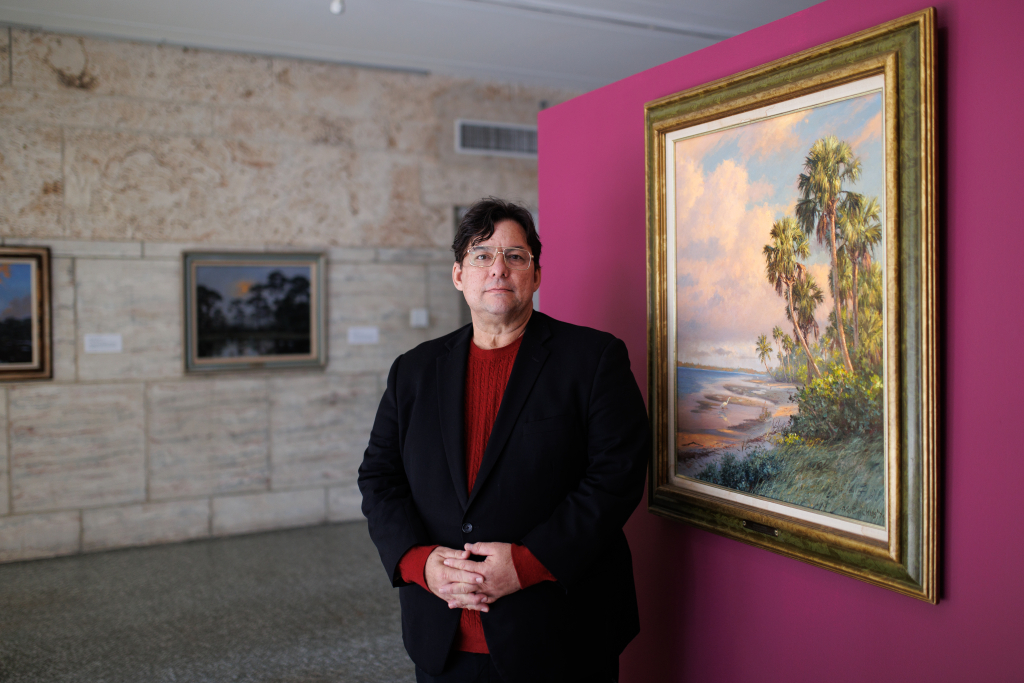
Because the Coral Gables Museum is housed in a building constructed in 1939 for the city’s police and fire departments, it’s assumed to be an institution in place for many decades. Actually, the museum did not open its doors to the public until 2011, the result of years of fund raising and hard work spearheaded by former city commissioner (and now Chair of the Museum’s board) Wayne “Chip” Withers.
At inception, the museum’s mission was primarily historic. That direction has been expanded to include art, and to embrace a visual dialogue between the city’s past and present. That transition had already begun before the arrival of Elvis Fuentes, executive director of the museum since 2022, but it has since accelerated. Thanks to Fuentes’ background – his credentials range from serving as a curatorial fellow in the Department of Russian and Soviet Nonconformist Art at Rutgers University just before coming to Coral Gables, to six years as Art Curator at New York’s El Museo del Barrio – the museum has held numerous exhibits of works by visual artists, including a major retrospective of Cuban-American artist Julio Laras and a group show by local painters and sculptors. The museum is currently showing the works of Florida landscape painter Beanie Backus.
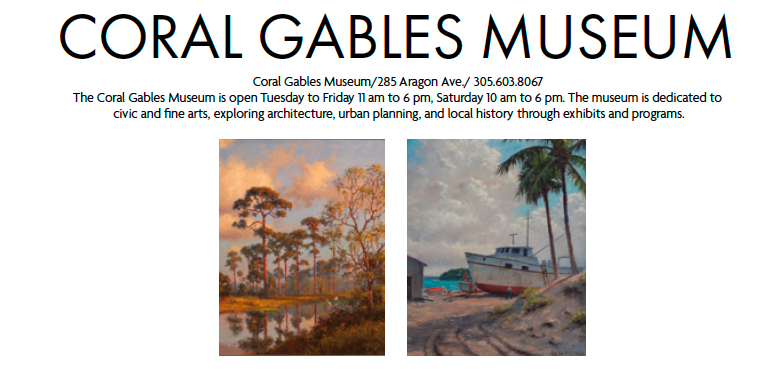
Transitioning the museum in the direction of the visual arts was not the only test that Fuentes faced when he arrived. “There were a few challenges,” Fuentes recalls. “We had a very serious situation with the building and an [historical] exhibition that was basically falling apart.” From outdated technology to a decade-old website, the museum was, in many ways, stuck in time. One of Fuentes’ first major decisions was to dismantle the long-running “Creating the Dream” exhibition and replace it with a more dynamic, rotating program. To make that history more relevant, Fuentes inaugurated a lecture series on urban design, connecting the city’s foundation and its current state. He also updated the stated mission, which now reads “to celebrate, investigate and explore the civic arts of architecture and urban and environmental design, and the visual arts.”
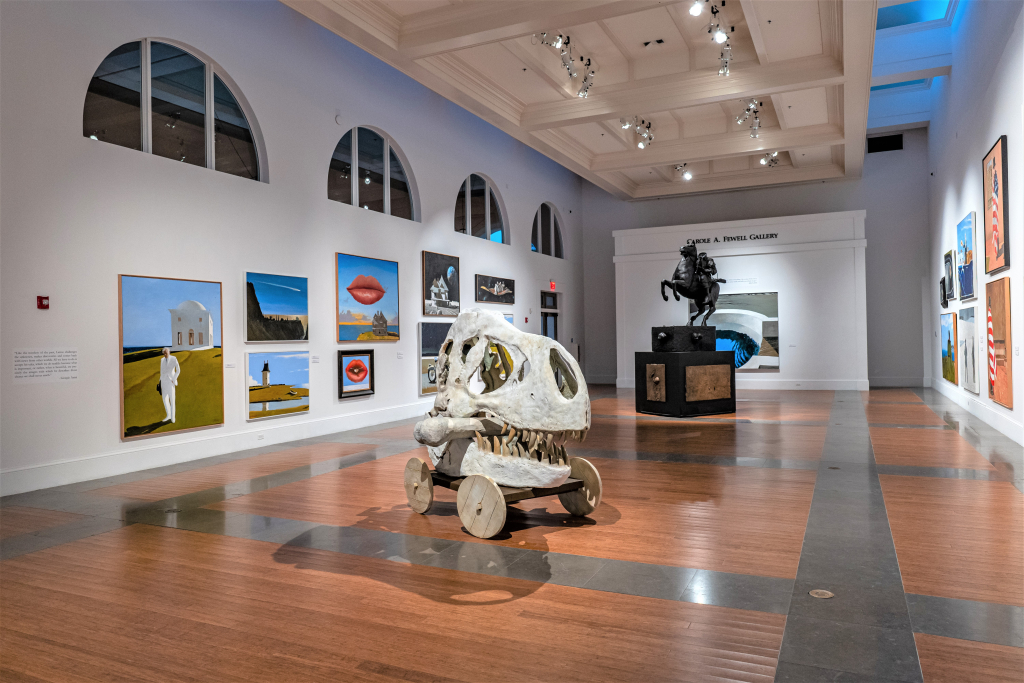
“The mission that I received was to re-evaluate the whole museum,” Fuentes explains. That meant studying its origins, interviewing founders, and confronting how the museum had already begun drifting toward art exhibitions. Rather than resist that evolution, Fuentes refined it. He advocated for incorporating the visual arts, but with a clear framework rooted in what he calls “civic arts,” the intersection of architecture, urban design, and public space.
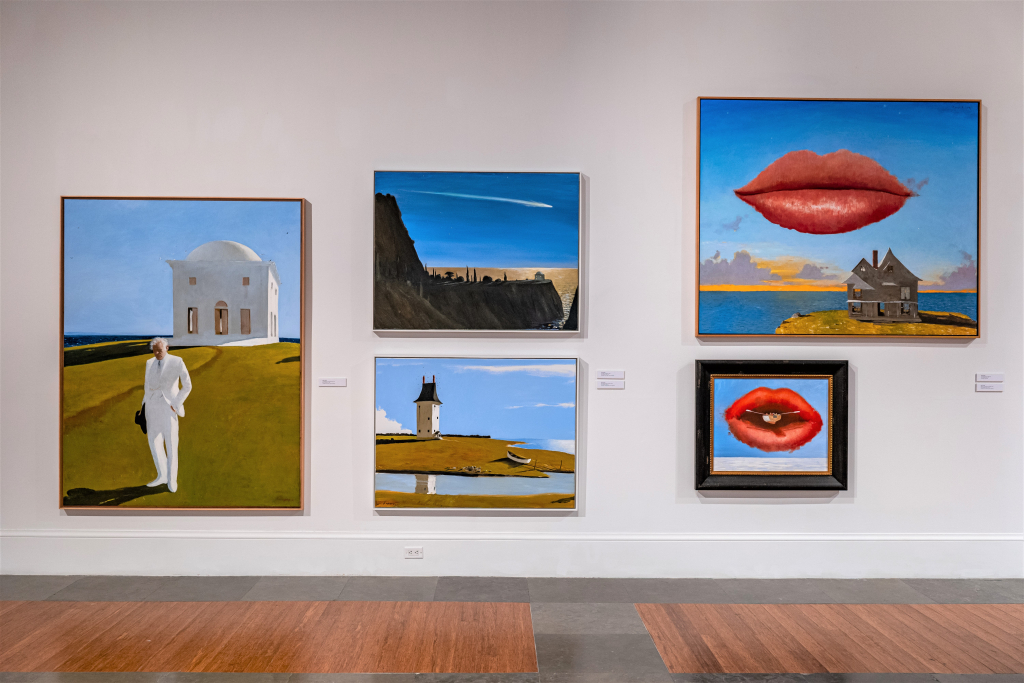
At the core of Fuentes’ approach is a belief that Coral Gables itself is a work of art. He often describes the city as a kind of large-scale creative endeavor. Reframing founder George Merrick’s vision, he suggests that “Coral Gables became sort of like his art project.” That idea – of a city as an artistic and civic experiment – now anchors the museum’s identity. It has also expanded its vocabulary of presentations to become ever more visual, even as it connects to the city’s history.
H. BENITEZ FINE ART


The H. Benitez Fine Art gallery first opened in the Gables in 2001, located on Alcazar Avenue. In 2022 it relocated to a storefront on Aragon, just down the street from Books & Books. It displays only the work of Humberto Benitez, a Cuban-American artist born in Havana in 1960 who moved to the U.S. at age 9. He spent his childhood in the small town of Guanajay, surrounded by the lush farmlands of “El Campo” in the western region of Pinar del Rio, and his work celebrates the rich culture and imagery of his homeland in explosive color and movement, especially the vibrantly dressed native dancers and musicians, along with scenes from the rural countryside. The Gallery can be visited by appointment Mon. to Fri. 11:30 am to 5 pm, and at special weekend times by appointment.
233 ARAGON AVE.
LISSETTE BENITEZ
786.877.1045
HBENITEZART@AOL.COM
GARCIA ART GALLERY


The Garcia Art Gallery is dedicated to the works of Fidel Garcia, a Mexican artist who has been painting for 45 years. His current works are hyperrealistic, with a penchant for portraying angels and elegant feminine figures. His paintings sell for $13,000 to $25,000 but can also be purchased as $100 prints or $2,000 for a framed reproduction done on canvas. The gallery is open Tuesday to Saturday from 11 am to 7 pm, with extended hours on Gallery Night (on the first Friday of each month). The Gallery is managed by Luis Gómez Rincón, a professor of art at the University of Venezuela (he teaches remotely) and an urbanist architect, who is always happy to greet visitors who would like to view the works of Garcia. The canvases are oversized and sensual, with religious overtones. Garcia is categorized as a “Figurative Expressionist” who fuses the physical with the metaphysical, and reality with fantasy.
102 GIRALDA AVE.
LUIS GOMEZ RINCON
929.462.2133
LUISPOLLO7@GMAIL.COM
PEDRIDO ARTE GALLERY & STUDIO


Pedrido Arte Gallery & Studio is a pop-up art gallery adjacent to the Miracle Theater, managed by Cuban artist Alejandro Pedrido and his partner Gabriela Martinez. It is a studio space for Pedrido and a showcase for emerging artists. The current show is a display of the paintings of Ventura González Padrosa, a Cuban artist whose works of abstract symbolism reflect the memory, landscape and cultural impact of his native country. His current exhibit at Pedrido Arte is “Memoria Insular,” and will be on display until May 15 (price points $500 to $30,000). Next the gallery will collaborate with the Spanish consulate for a new exhibition featuring nine Spanish artists. The gallery also offers art classes and aims to create an inclusive, welcoming space, open: Mon.-Wed. 10 am to 8 pm; Thurs.-Fri. 2 pm to 10 pm; Sat. noon to 10 pm; Sun. 10 am to 5 pm to 5 pm.
290 MIRACLE MILE
GABRIELA MARTINEZ
786.287.2771
NEWS@PEDRIDOARTE.COM