The Saving of City Hall
|
Getting your Trinity Audio player ready...
|
Beginning Next Month, City Hall Will Be Evacuated For Its Long Overdue Overhaul

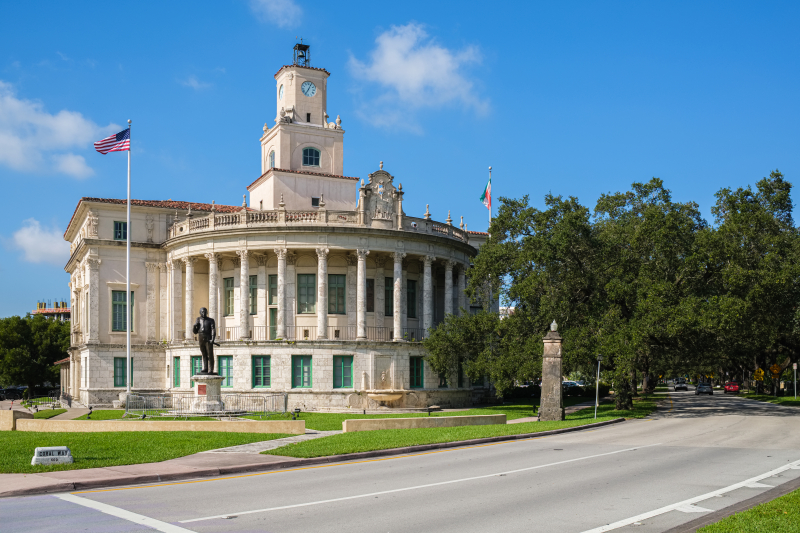
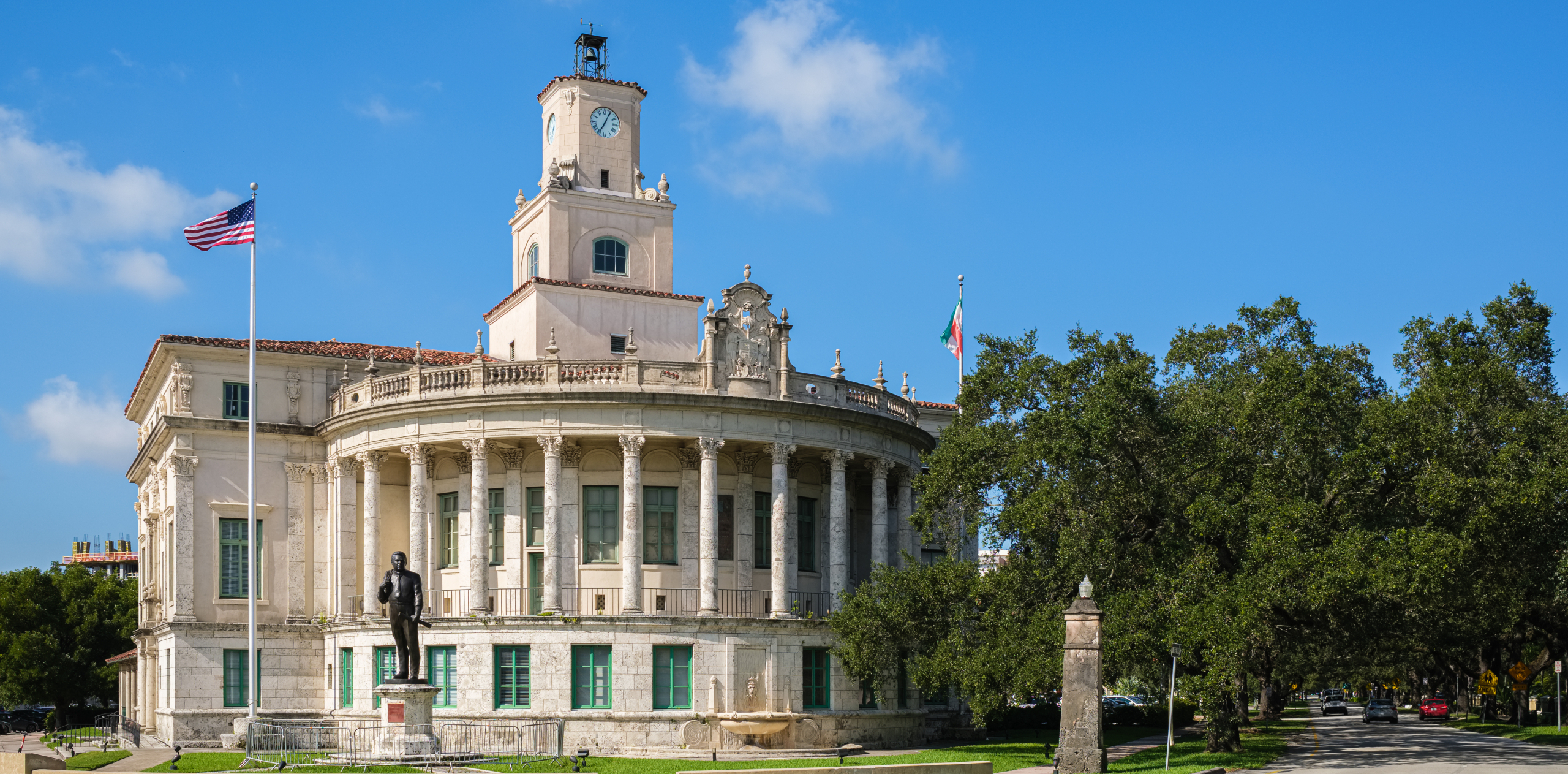
By any measure, the restoration of Coral Gables’ City Hall is long overdue. “Nothing’s been done [to restore] the building in about 98 years, and we need to do a major tune up,” says City Manager Peter Iglesias, a structural engineer by training who will oversee the project.
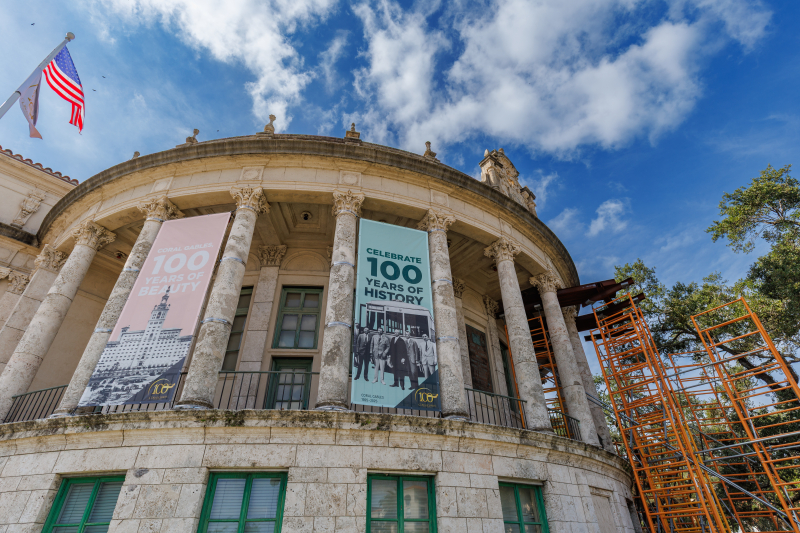
Most urgent are repairs to the stone columns that are the defining element of the building’s semi-circular Corinthian colonnade. According to Richard Heisenbottle, founding president of the firm (R.J. Heisenbottle Architects) undertaking the building’s repair assessment and design plans, some of these columns are so cracked that scaffolding has already been erected to help with their support. It turns out the columns were made with blocks of limestone, not of the reinforced concrete they were thought to be. Each will require steel bars installed inside.
“We know more about City Hall than we thought we ever could,” Heisenbottle told the City Commission last fall, when describing what needed to be done. Throughout the exterior, severely damaged limestone will be replaced with new matching stone, while damaged stucco will be replaced to match the original color, texture, and finish.
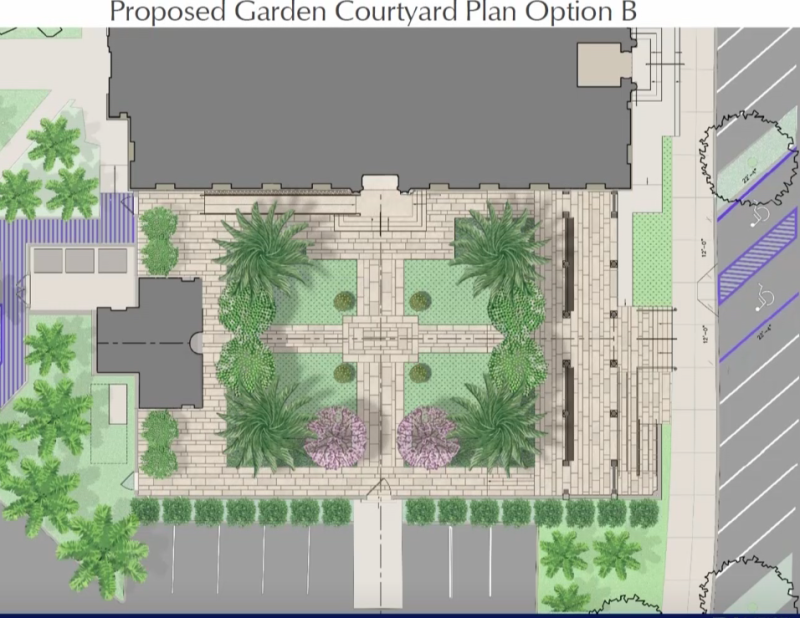
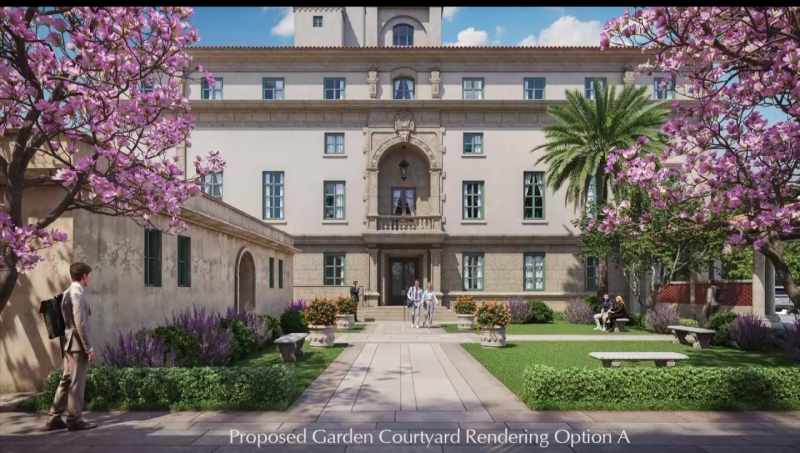
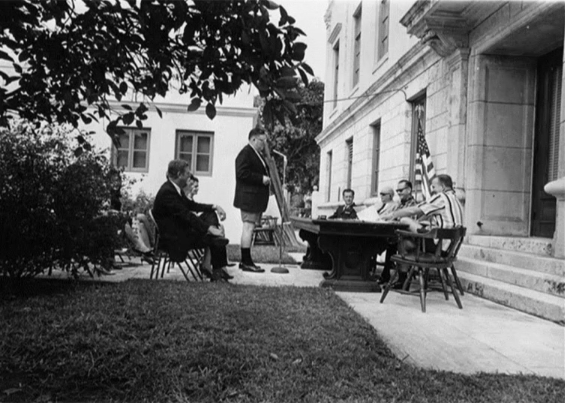
The most dramatic change will be the restoration of the original Garden Courtyard behind City Hall, which has, for years, been used as a civic and ceremonial space – even serving as a location to hold City Commission meetings when City Hall became too hot, back in the days before the building was air conditioned. In the 1960s, a small building was erected in part of the courtyard, effectively eliminating its use for public events.
Also removed from the courtyard was a smaller building off to the side, which once held public bathrooms. The idea, according to Heisenbottle, is to remove the newer, non-historic building there, restore the bathrooms, replace the original courtyard planters, remove an abandoned septic tank sitting in the middle of the courtyard, and repave the walkways. “We want to return this to its historic character [so] you get to see the building in its full breadth. It would return two public toilets for the public to use when there are events on Biltmore Way rather than using portable toilets, which no one likes,” said Heisenbottle.
In order to accommodate the rebuilding of City Hall, city staff will relocate to the 2020 Ponce building – including the city manager, city clerk, city attorney, and finance department – while the City Commission and its liaison staff move to offices at the Minorca Garage building adjacent to the Public Safety Building.
When staff relocates at the beginning of March, the city can conduct exploratory demolition and finalize the construction documents. “We have elected to restore the building inside and out,” says Iglesias, “and restoration is very difficult.” The city manager says that demolishing the building and starting from scratch would have been far easier and less expensive. Completion date for the “very complicated” restoration is third quarter 2028.
Actual construction will begin this fall after final design documents are completed. Thornton Construction has been chosen as the contractor. Because of complications inherent in the project, Thornton was awarded what’s called a “construction manager at risk” contract, which means the city will be involved in all aspects of the process, including awarding sub-contracts.
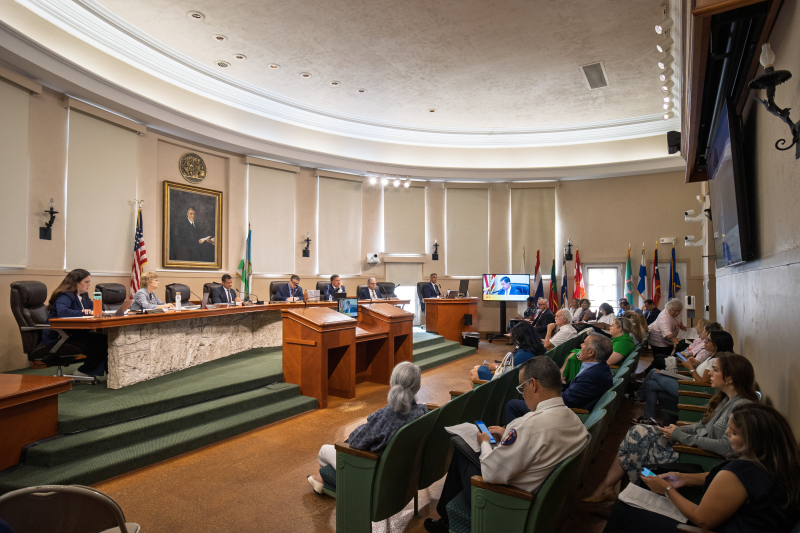
Other changes envisioned for the restoration include a return of the original orientation of the City Commission, toward the curve of windows which are now behind them, and restoration of a semi-circular area on the first floor beneath the Commission chamber, which will be used as an event space.
Iglesias says the city’s Historic Preservation Board was very impressed with the restoration plan, as has been most of the public. One of the few objections raised was to the replacement of the building’s original windows with modern framing, rather than restoring them to their original wooden enclosures, which would have been far more expensive and arguably less hurricane resistant.
“The windows were an issue. We wanted them to be restored,” says Karelia Carbonell, president of the Historic Preservation Association of Coral Gables. “City Hall is one of the few buildings that retained its original fenestration. Other than that, the Heisenbottle team is very sincere in following the national guidelines [and] very aligned with the authenticity of the building. The proposal to bring back the chamber to its original design gave me a big smile. I think the project is in good hands.”
When it was originally finished in 1928, the building – designed by architects Phineas Paist and Harold Steward – had taken just five months to complete for a cost of about $200,000. The restoration will take two years and cost between $25 and $30 million. The city hopes to partially offset expenses with grant money from the Florida Department of Historical Resources.