
Rebyl With A Cause
|
Getting your Trinity Audio player ready...
|
One Woman’s Fight for Miracle Mile
By Sally Baumgartner
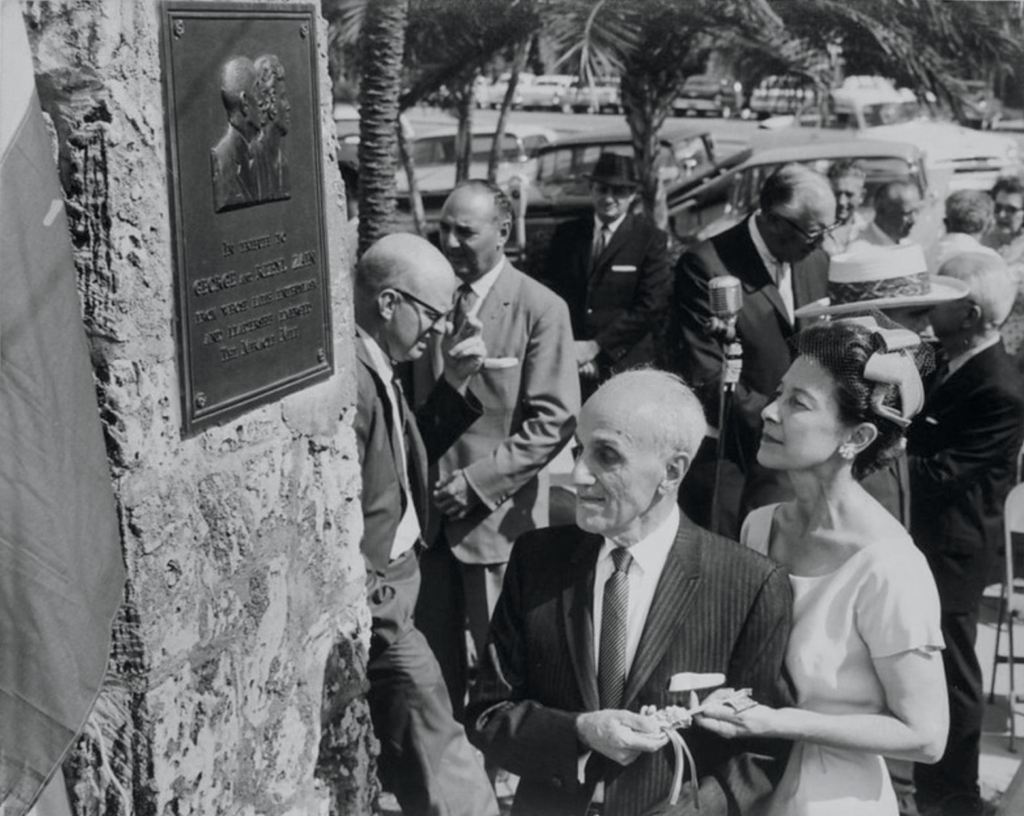
George K. Zain, the “father” of Miracle Mile, and his tireless wife Rebyl became a force in Coral Gables when they arrived in 1943. The pair had history dating back to 1930, when young Rebyl Silver first went to work for George at Zain Advertising System, the company the Lebanon native had founded in 1912 in New York City. She was 21. He was 42 and going blind. In 1935, he founded Zain Features Syndicate, which published Famous Comics. That was the same year that he married Rebyl.
For the next 30 years, George and Rebyl had an inseparable partnership. Though he was the man with the vision, Rebyl was his eyes. They moved from New York to Los Angeles in 1940, and then to Coral Gables in 1943 after he closed his advertising agency and officially applied for citizenship. They wintered in Coral Gables, and spent their summers in North Carolina, like most of the Gables’ “residents.”
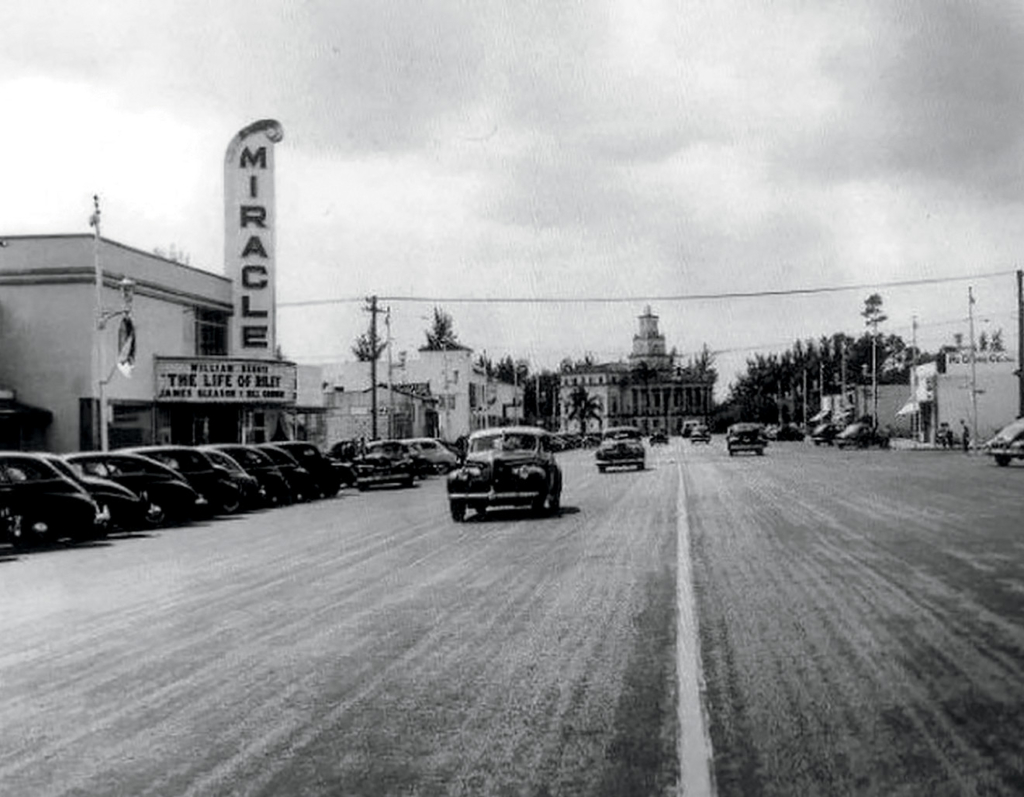
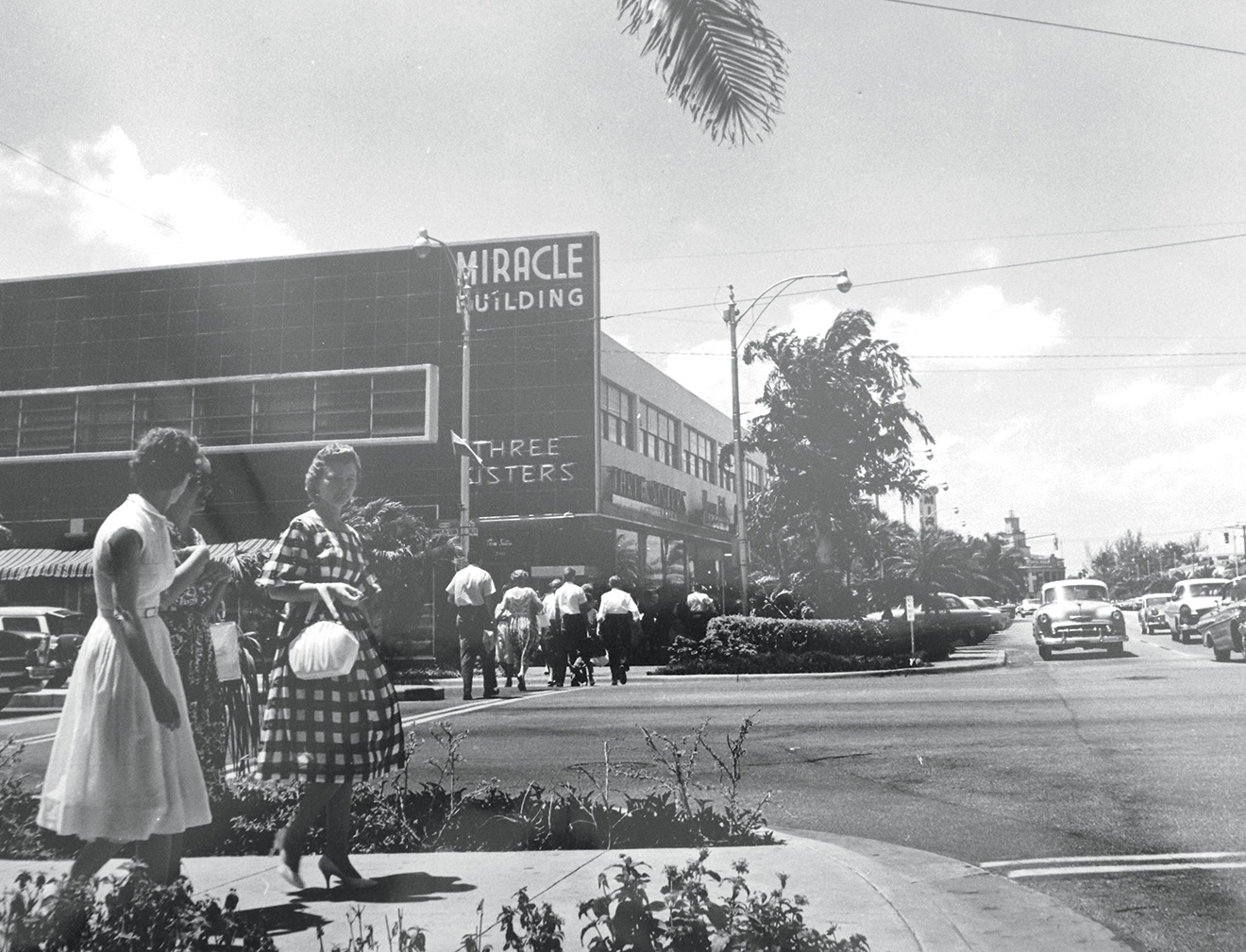
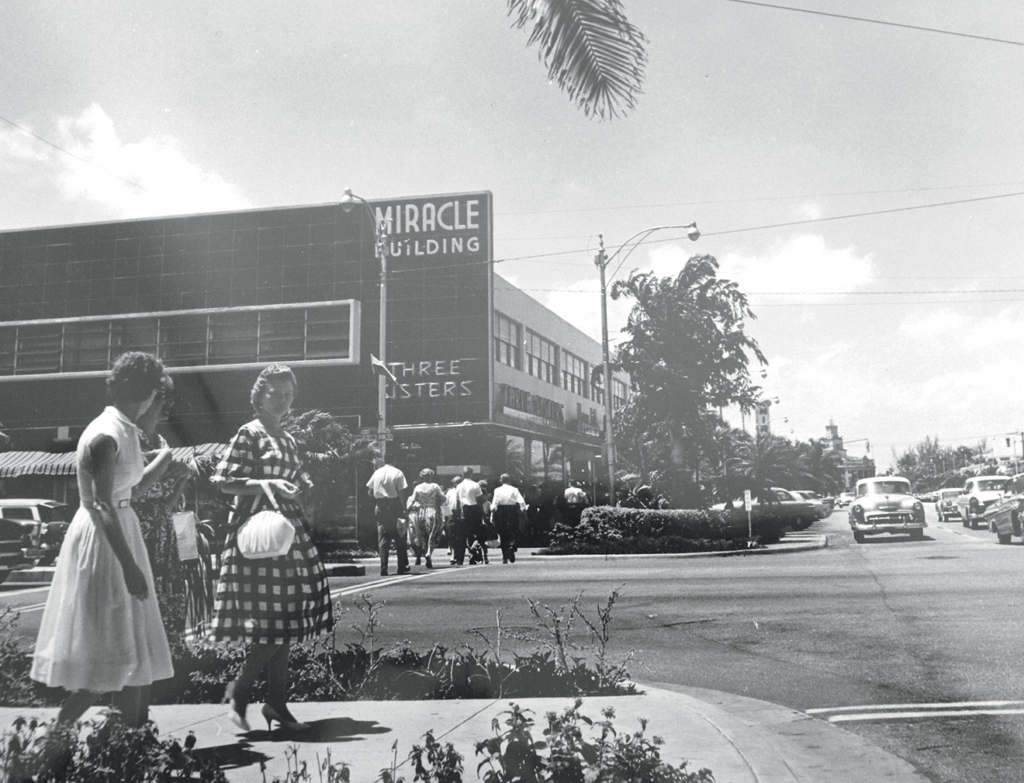
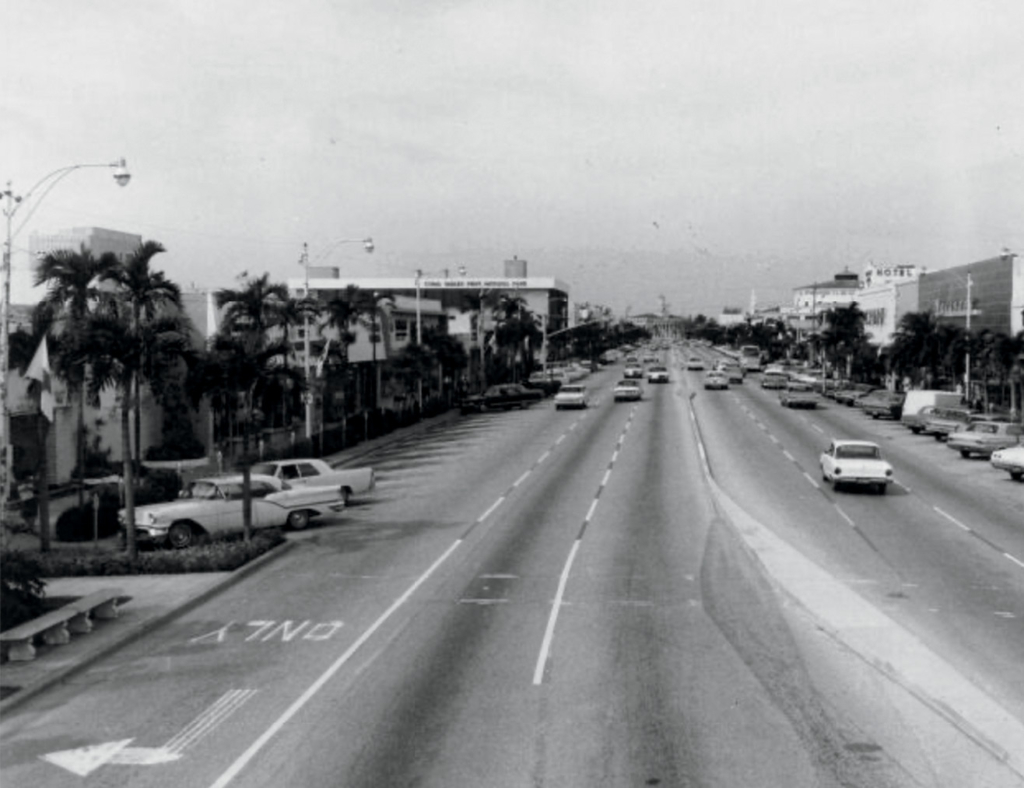
The pair devoted themselves to nurturing and developing the iconic main street that began at Douglas Road and ended at LeJeune. In 1955, the street was officially named “Miracle Mile.”
The first cohesive plan for the development of Coral Gables’ downtown was conceived by Zain. In 1946, he patented the Zain Plan for Off-Street Parking, leasing the land he owned behind retail stores to the City to build the parking garages we see today, the first of which was behind 220 Miracle Mile, just west of Ponce de Leon. The concept was revolutionary at the time.
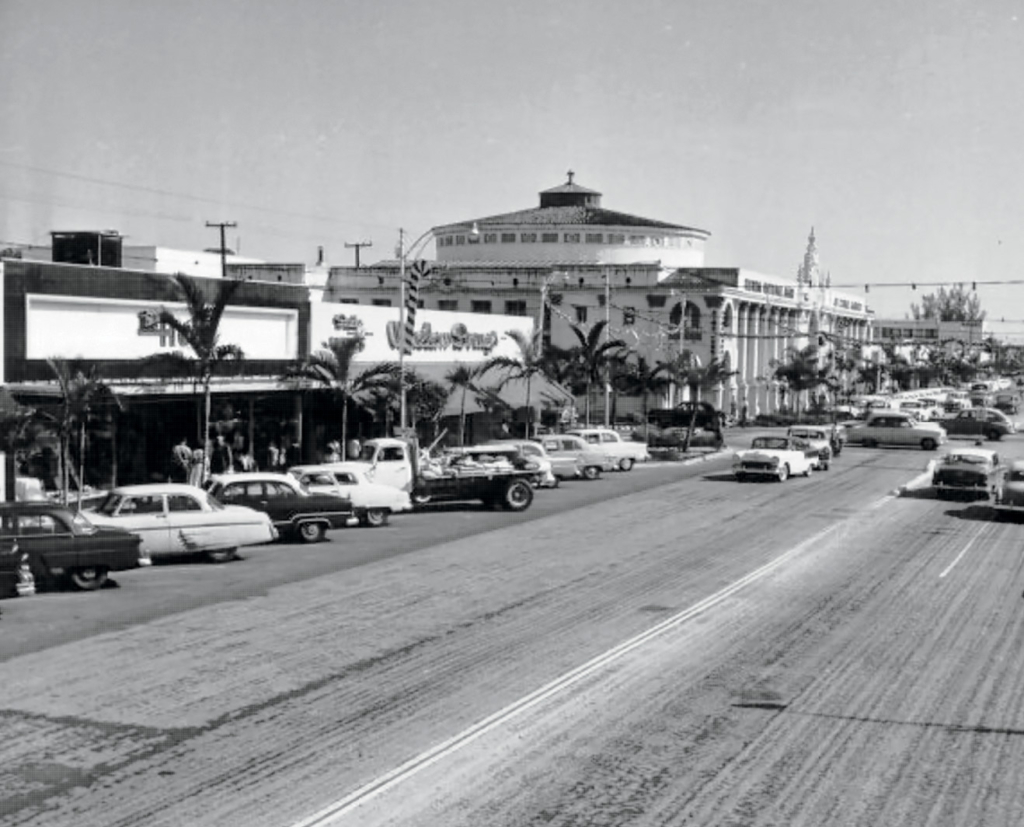
He also purchased a lot of land on Coral Way, making a big bet on the future of “the Mile.” He owned all of the property on the south side of the street running from Ponce to Salzedo, bought when Merrick’s creditors were selling out at half-price. He also owned the property in the middle of the 100-block beginning at what is now known as McBride Park (next to Barnes & Noble) to the corner of Galiano Street. After the war, and once development was underway, he and Rebyl enticed some of the finest retailers in the country – names like Hart Schafner & Marx, Elizabeth Arden, Adrian Thal Furriers, and Lily Dache – to open stores on Miracle Mile.
The pair devoted themselves to nurturing and developing the iconic main street that began at Douglas Road and ended at LeJeune. In 1955, the street was officially named “Miracle Mile.” The Zains quickly formed a Merchants Association and Albert Friedman of Ro’al Fashions became the first President.
Rebyl took up the yoke of managing director – of everything George wanted. She even created special lighting for the Christmas season – giant red bell “lampshades” that went over the top of the streetlights on Miracle Mile and Ponce. Anyone flying into Miami during the holidays in the mid 1950s and ’60s would see a large red cross from the air. It ran north to south on Ponce, from SW 8th Street to University Drive, and east to west on Miracle Mile, from Douglas Road to LeJeune. The streetlights were all changed in the 1980s and the bells can no longer be attached; they are stored today somewhere in the entrails of the City’s warehouse (or at least they were a few years ago).
George Zain passed away in September 1966 and Rebyl faced a difficult personal future. With property, assets, and a lifetime income, she had no financial difficulties, but for decades she had been George’s constant right arm – and eyes. She returned to Coral Gables from their home in Hendersonville, N.C. that year to bury her husband in his beloved city. She took an apartment in the David William, but without George, she felt purposeless. Her closest friends promptly began urging her to launch herself into community affairs. What happened was unpredictable.
Summer, winter, spring or fall, Whatever your needs you’ll find them all On World Famous Miracle Mile A street of dreams. A street of fashion news. A street that has everything that everyone can use. Summer, winter, spring or fall, Whatever your needs you’ll find them all On World Famous Miracle Mile.
In January 1967, she took over a vacant office on the second floor of 220 Miracle Mile. In the space of a few months, she brought new vigor and purpose to the failing Miracle Mile Merchant’s groups. Lee Baumgartner had just been installed as the president of the Merchants Association and she depended on him to bring the jewelers, clothiers, etc., together under the umbrella of the Association. Meanwhile, she coerced the mostly absentee property owners to create and implement a cohesive program for the revitalization and ongoing promotion of Miracle Mile. Long before the BID (the downtown Business Improvement District), they created the Miracle Mile Association, a joint effort between the merchants and the property owners to promote and grow the street. She successfully raised more than $100,000 and conceived a year-round marketing and advertising program.
In June 1967, Rebyl wrote a song that was the basis for a radio campaign, inviting people to visit “World Famous Miracle Mile.” The song was recorded by the big band of Fred Smith, who was the musical director at the Coral Gables Country Club. The vocalists were Don Muller from the University of Miami School of Music and popular big-band singer Pat Lockwood. Rebyl then made a huge media buy and placed ads in 12 major markets just in time for the upcoming season.
But all the advertising and cute jingles weren’t going to make a difference if things in Coral Gables didn’t change. To Rebyl’s chagrin, things were moving way too slowly in the city. She attended nearly every community or business group meeting, raising questions, setting goals, and urging programs to spur more business activity. She talked about parking improvements, development, new zoning, liberalized liquor laws, renovation landscaping – virtually everything that she felt was needed to revitalize Miracle Mile.
The administration at the time included Mayor Jerry Dressel and Commissioners William Chapman, W. Keith Phillips, Joe Murphy, and George Wilson. They grimaced when her name was mentioned, and one day at a meeting complained, “Now she’s trying to run the city.” Rebyl took it one step further: When she found there was little or no inclination on the part of the City Commission to foster Miracle Mile, she decided it was time to back the “right candidates” for the future of the street.
Every morning at 5 am, Rebyl would visit her late husband’s grave. She would talk to him for a while, cry a little, then stuff the wet tissues in her bag and attend early breakfast meetings. After, she would hurry to the office to begin her day on the phone. She was determined to find a candidate who shared her vision, and she found him in insurance executive William H. “Bill” Kerdyk, Sr., brother of former mayor Frank Kerdyk. Despite the fact that Kerdyk was advised not to run for office, Rebyl changed his mind. She moved another desk into her 220 Miracle Mile Building office and made it his campaign headquarters.
On April 3, 1967, Pat Murphy, editor of the Coral Gables Times wrote: “Coral Gables politics normally is almost like its streets: quiet, orderly, and unengaging. But the current city commission campaign is changing all of that and turning the campaign into a race with issues, rather than a match of club memberships between incumbents and hopefuls. It may also be a shift in the new voting power of Coral Gables residents’ moving away from the absolute domination of the traditionalists, with more influence and participation from the younger Gabelites with a view to the future. The search for the spirit, pace, and interest in this year’s elections rests squarely on the effervescent 57-year-old widow of G. K. Zain, who, five months ago, was ready to curl up in the corner and let the world go by.”
Politically, she was not afraid to tangle with anyone. She openly attacked Commissioner William Chapman’s views against relaxing liquor laws. She criticized the caliber and methods of city government. She cajoled, convinced, and persuaded nearly 20 civic groups – some of them with the narrowest of goals until she took charge – to sponsor a Town Hall meeting to hear the candidates’ views on the future of the city and the importance of the downtown business corridor. Airing the differences between the candidates was the turning point in the election and, thanks to her efforts, both Kerdyk and W. L. Philbrick were elected to the City Commission.
Rebyl was either liked or disliked – there was no middle ground. The dynamic, full-throttle thrusts for her projects upset people who didn’t want the status quo changed…
Rebyl was either liked or disliked – there was no middle ground. The dynamic, full-throttle thrusts for her projects upset people who didn’t want the status quo changed; her methods were unconventional and sometimes intrusive. But she didn’t care. In 1969, she ran and won the City Commission seat vacated by W. Keith Phillips, who became mayor.
The more involved Rebyl got in the politics of the city, the more she wanted to “make things right.” To that end, she decided she would run for mayor in 1973. In March of that year, a month before the election, she learned that she had cancer and only months to live. With great regret, she withdrew from the election.
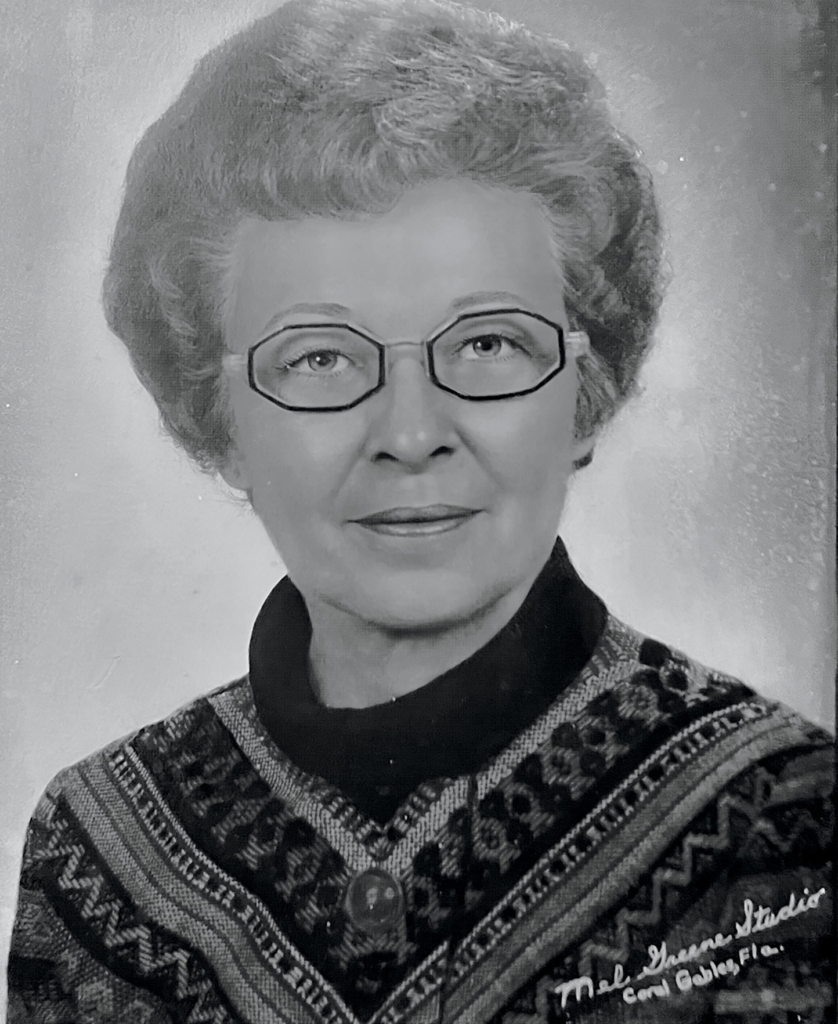
After hearing the news of her illness, her fellow commissioners voted her “Mayor For A Day.” And though the Commission believed that only portraits of mayors should be on display on the second floor of City Hall, Commissioner Bill Kerdyk, Sr. made sure a portrait of Rebyl (commissioned by the Ponce de Leon Development Association) became part of the lineup. Rebyl passed away on July 9, 1973. Thanks to Commissioner Kerdyk, her portrait remained on the walls of City Hall until the late 1990s.